
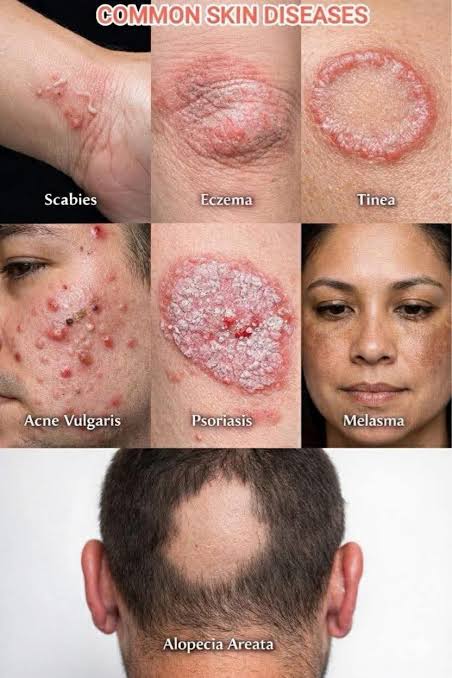
Skin diseases are common health conditions that can affect people of all ages. They may cause itching, redness, dryness, rashes, swelling, or changes in skin texture. Some skin conditions are temporary, while others may require ongoing treatment.
What Are Skin Diseases?
Common Skin Diseases
- Acne – Causes pimples, blackheads, whiteheads, and clogged pores.
- Eczema – Often causes dry, itchy, red, and irritated skin.
- Psoriasis – Causes thick, scaly, and inflamed patches on the skin.
- Fungal Infections – Can cause itching, redness, scaling, and skin rashes.
- Hives – Raised, itchy bumps or patches that may appear suddenly.
- Dermatitis – Causes skin inflammation, irritation, redness, and itching.
- Scabies – A contagious condition that causes intense itching and small skin rashes.
- Rosacea – Often causes facial redness, visible blood vessels, and sometimes small bumps.
- Warts – Small, rough skin growths caused by certain types of viruses.
- Vitiligo – Causes lighter or white patches to develop on different areas of the skin.
Common Symptoms of Skin Diseases
- Redness or skin discoloration
- Itching or irritation
- Dry or cracked skin
- Skin rashes
- Swelling or inflammation
- Scaly or flaky skin
- Blisters or small bumps
- Changes in skin texture
- Pain or tenderness
- Skin discoloration or unusual patches
Common Causes
- Allergies or allergic reactions
- Bacterial, viral, or fungal infections
- Genetic factors
- Excessive sun exposure
- Stress and hormonal changes
- Poor skin care
- Harsh soaps or skincare products
- Certain medications
- Environmental pollution and irritants
- Insect bites or parasites
- Weak immune system
- Excessive sweating or moisture
Simple Tips for Healthy Skin
- Keep your skin clean and moisturized.
- Use sunscreen when going outdoors.
- Drink plenty of water.
- Eat fresh fruits and vegetables.
- Avoid harsh soaps and skincare products.
- Do not scratch irritated skin.
- Get enough sleep and manage stress.
- Keep towels and personal items clean.
- Avoid excessive sun exposure.
- Follow a simple daily skincare routine.
When Should You See a Doctor?
You should consider seeing a doctor or dermatologist if a rash or skin change is persistent, painful, spreading quickly, infected-looking, or associated with other concerning symptoms. Early evaluation can help identify the cause and guide appropriate treatment.
Final Thoughts
Healthy skin needs regular care and protection. Many skin diseases can be managed effectively when identified early. Avoid self-diagnosing persistent or severe skin problems, and seek professional medical advice when needed.
FAQs About
What are common skin diseases?
Common skin diseases include acne, eczema, psoriasis, fungal infections, hives, dermatitis, and scabies.
What are the common symptoms of skin diseases?
Common symptoms include itching, redness, dryness, rashes, swelling, scaling, blisters, and changes in skin texture.
What causes skin diseases?
Skin diseases can be caused by infections, allergies, genetics, sun exposure, stress, hormonal changes, and environmental irritants.
How can I keep my skin healthy?
Keep your skin clean and moisturized, use sunscreen, drink enough water, eat a balanced diet, and avoid harsh skincare products.
Are all skin diseases contagious?
No. Some conditions such as scabies and certain fungal infections can spread while conditions like acne, eczema and psoriasis are generally not contagious.
When should I see a doctor?
See a doctor or dermatologist if a skin problem is persistent, painful, spreading, infected-looking, or getting worse.