
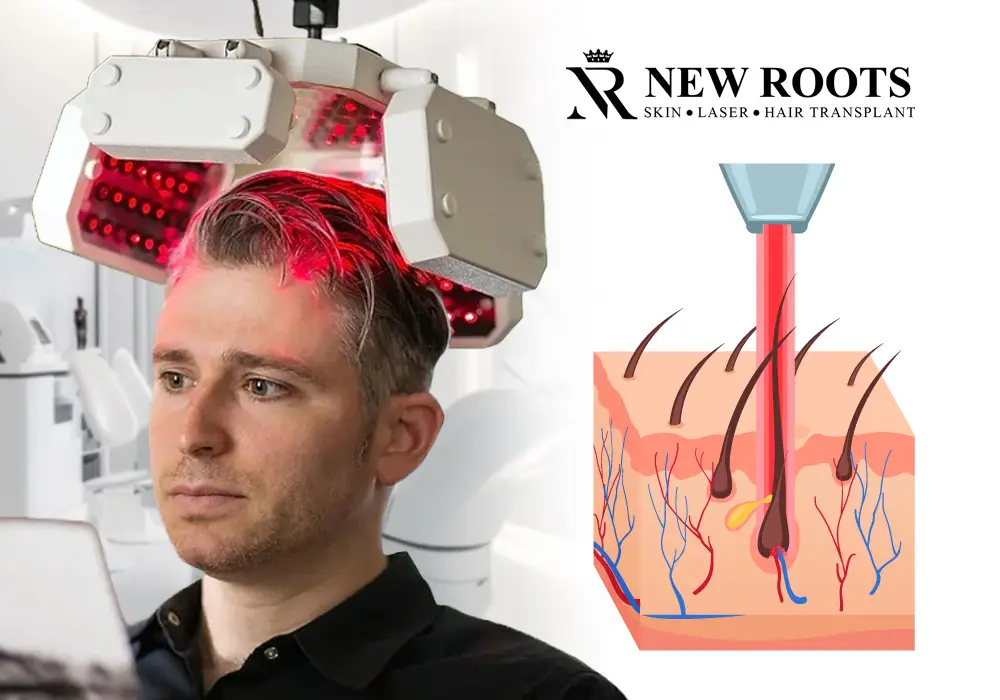
Hair loss is a common concern for both men and women. While there are many treatment options available, laser tretment for hair loss has gained attention as a non-invasive approach that may help support healthier hair growth.
What Is Laser Treatment for Hair Loss?
Laser treatment for hair loss uses low-level light energy to stimulate the scalp and hair follicles. It is often called Low-Level Laser Therapy (LLLT) or red-light therapy. The goal is to support follicle activity and improve the environment for hair growth
How Does Laser Hair Loss Treatment Work?
Low-level laser devices deliver light to the scalp. The light may help improve cellular activity around hair follicles and support the natural hair-growth cycle.
Treatment is generally painless and does not require surgery or downtime.
Benefits of Laser Treatment for Hair Loss
- May help stimulate hair follicles
- Can support healthier hair growth
- May improve hair thickness and density
- Non-surgical and generally painless
- Requires little or no downtime
- Can be used by both men and women
- May improve scalp and follicle health
- Can be combined with other hair-loss treatments
- Suitable for long-term treatment plans
- May help slow certain types of hair thinning
Who May Benefit From Laser Hair Treatment?
Laser therapy may be considered by people experiencing certain types of hair thinning, particularly pattern hair loss. Results can vary depending on the cause and severity of hair loss.
A dermatologist or qualified healthcare professional can help determine whether laser treatment is suitable for you.
What to Expect During Treatment
A laser hair-loss session is usually simple and comfortable. A specialized device is positioned over the scalp, allowing low-level light to reach the targeted areas.
The exact treatment schedule depends on the device and individual needs. Consistent use is generally important because hair growth takes time.
Are There Any Side Effects?
Low-level laser therapy is generally considered well tolerated, but some people may experience mild scalp discomfort, redness, or irritation. It is important to use an appropriate device according to professional guidance and manufacturer instructions.
How Long Does It Take to See Results?
Hair growth is a gradual process, so results do not usually appear immediately. Some people may notice changes after several months of consistent treatment, while others may see little or no improvement.
The outcome depends on factors such as the cause of hair loss, age, genetics, overall health, and treatment consistency
Laser Treatment vs. Other Hair Loss Treatments
Laser therapy is only one option for managing hair loss. Depending on the cause, a healthcare professional may also recommend medications, nutritional evaluation, lifestyle changes, or other procedures.
Finding the underlying cause of hair loss is important before choosing a treatment.
Tips for Better Hair Health
- Eat a balanced diet rich in protein, vitamins, and minerals.
- Drink enough water throughout the day.
- Keep your scalp clean and healthy.
- Avoid excessive heat from hair dryers and straighteners.
- Limit harsh chemical treatments and frequent coloring.
- Avoid tight hairstyles that pull on the hair.
- Gently brush and handle wet hair.
- Get enough sleep and manage daily stress.
- Avoid smoking and excessive alcohol consumption.
- Consult a dermatologist if you notice sudden or excessive hair loss.
FAQs
- Is laser treatment for hair loss safe?
Low-level laser therapy is generally considered safe when used correctly. - Does laser treatment regrow hair?
It may help stimulate hair follicles and support hair growth in some people. - Is laser hair treatment painful?
No. It is generally painless and usually does not require anesthesia. - How long does laser treatment take to work?
Visible results may take several months because hair growth is gradual. - Can women use laser treatment for hair loss?
Yes, it may be suitable for women with certain types of hair thinning. - Can laser treatment stop hair loss permanently?
No. Results vary and depend on the cause and type of hair loss. - How often should laser treatment be used?
The frequency depends on the device and individual treatment plan. - When should I see a dermatologist?
See a dermatologist if hair loss is sudden, severe, patchy, or persistent.
Final Thoughts
Laser for hair loss is a non-surgical option that may help support hair growth and improve hair thickness for some people. Because hair loss can have many different causes, getting a professional assessment can help you choose the most appropriate treatment.