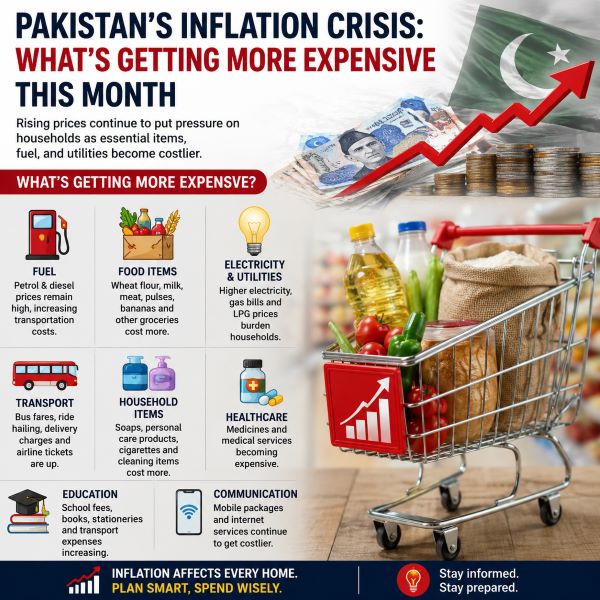
Inflation in Pakistan continues to affect millions of households as prices of essential goods and daily use services rise again this month. From petrol and electricity to food items and transportation, families across the country are struggling to manage monthly budgets. While inflation rates had shown some improvement earlier, recent increases in fuel prices and utility costs are once again putting pressure on consumers.
According to recent economic reports, Pakistan’s inflation rate increased sharply in recent months, with transport, food and housing costs becoming major contributors.
Why Inflation Is Rising Again in Pakistan
Pakistan’s inflation crisis is linked to several major factors:
- Rising global oil prices
- Higher petroleum levy and fuel adjustments
- Increase in import costs
- Rupee depreciation pressure
- Electricity and gas tariff hikes
- Transportation and logistics expenses
- Supply chain disruptions
Fuel prices are currently the biggest trigger behind rising inflation because transportation costs affect nearly every product sold in local markets.
Petrol and Diesel Prices Continue to Hurt Consumers
One of the biggest concerns this month is the sharp increase in petrol and diesel prices in Pakistan. Reports show petrol prices moved close to Rs400 per litre after recent government adjustments.
This increase directly affects:
- Public transport fares
- Ride-hailing services
- Delivery charges
- Goods transportation
- Agricultural machinery costs
Truck operators and transporters usually pass these increased fuel expenses to businesses, which then raise prices for consumers. Even vegetables and groceries become more expensive because transportation costs rise from farms to cities.
Although the government recently announced a small reduction in fuel prices, overall petroleum costs remain extremely high compared to previous years.
High Electricity and Utility Bills
Electricity prices continue to be one of the biggest financial burdens on Pakistani households. Utility inflation has remained high because of fuel adjustments, taxes and rising energy production costs.
Recent economic reports show housing and utility inflation increased significantly this year.
Consumers are paying more for:
- Electricity bills
- Gas bills
- LPG cylinders
- Water charges
- Generator fuel
For many households in cities like Karachi, Lahore and Islamabad, summer electricity bills are becoming extremely difficult to manage because of heavy air-conditioner usage and increasing unit prices.
Impact on Businesses and Small Traders
Small businesses in Pakistan are also under pressure due to inflation. Shopkeepers, restaurants, transport companies and online businesses are facing higher operational costs.
Many businesses are struggling with:
- Increased rent
- Higher electricity bills
- Expensive imported products
- Rising employee salaries
- Fuel and transportation expenses
As a result, many sellers increase prices to survive, which further contributes to inflation across the market.
What Experts Are Saying
Economic analysts believe Pakistan may continue facing inflationary pressure in the coming months if global oil prices remain unstable. Reports suggest inflation could remain above official targets due to fuel and food costs.
Some economists also warn that international market tensions and energy import costs may create additional pressure on Pakistan’s economy.