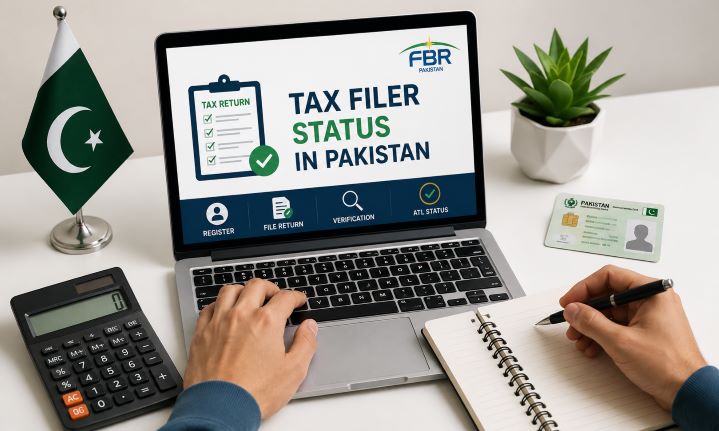
Becoming a tax filer in Pakistan is one of the smartest financial decisions you can make. If you are searching for how to get a tax filer status in Pakistan, understanding the process can help you save money on taxes, improve your financial credibility, and stay compliant with government regulations. Fortunately, the process has become much easier through the online systems provided by the Federal Board of Revenue (FBR).
This guide explains the complete process of obtaining tax filer status in Pakistan, the benefits of becoming a filer, and the steps required to get your name included in the Active Taxpayers List (ATL).
What Is a Tax Filer in Pakistan?
A tax filer is an individual or business whose name appears on the Active Taxpayers List (ATL) maintained by the Federal Board of Revenue. To become a filer, you must register with FBR and submit your annual income tax return.
Once your return is successfully filed and processed, your name is added to the ATL, officially granting you tax filer status.
Why Is Tax Filer Status Important?
The Government of Pakistan imposes higher withholding taxes on non-filers. Therefore, becoming a filer can significantly reduce the amount of tax you pay on various financial transactions.
Some major benefits include:
- Lower tax rates on banking transactions
- Reduced withholding tax on vehicle registration and transfer
- Lower tax rates on property purchases and sales
- Better financial standing and credibility
- Easier access to banking and investment services
- Compliance with Pakistan’s tax laws
For business owners, freelancers, salaried individuals and investors, becoming a filer is highly beneficial.
Requirements for Tax Filer Registration
Before starting the registration process, make sure you have:
- A valid CNIC
- An active mobile number registered in your name
- A valid email address
- Details of your income sources
- Information regarding bank accounts and assets
- Employment or business details
Keeping these documents ready can help you complete the process efficiently.
Step 1: Register with FBR
The first step in obtaining tax filer status in Pakistan is registering with the Federal Board of Revenue.
You can create your taxpayer account by providing:
- CNIC number
- Mobile number
- Email address
- Basic personal information
After verification, you will receive access to your taxpayer profile.
Step 2: Complete Your Taxpayer Profile
Once your account is created, you must complete your taxpayer profile.
This typically includes:
- Personal information
- Residential address
- Employment information
- Business details (if applicable)
- Contact details
Ensure all information is accurate because incorrect data can delay the process.
Step 3: Gather Income and Asset Information
Before filing your return, collect information regarding:
- Salary income
- Business income
- Freelance earnings
- Rental income
- Investments
- Bank accounts
- Vehicles
- Properties
Accurate reporting is essential for successful tax return submission.
Step 4: File Your Income Tax Return
Filing your income tax return is the most important step in becoming a tax filer.
When preparing your return:
- Declare all sources of income.
- Report your assets and liabilities.
- Review the information carefully.
- Submit the return online.
Once submitted, keep a copy of the acknowledgment receipt for future reference.
Step 5: Check Your ATL Status
After your return is processed, your name may be added to the Active Taxpayers List.
You can verify your status by checking your CNIC through the FBR ATL verification system.
If your name appears on the ATL, you have successfully obtained tax filer status in Pakistan.
How Long Does It Take to Become a Tax Filer?
The time required depends on FBR processing schedules and the accuracy of your tax return. In most cases, taxpayers can verify their status shortly after successful processing and ATL updates.
Common mistakes to avoid:
Many applicants face delays due to simple mistakes such as:
- Entering incorrect CNIC information
- Failing to declare all income sources
- Incomplete taxpayer profiles
- Missing tax filing deadlines
- Errors in asset declarations
Reviewing your information carefully before submission can help prevent these issues.