AI-powered communication is becoming an important part of modern life. From smart chatbots and virtual assistants to AI-powered emails and customer support, artificial intelligence is making communication faster, easier, and more personalized.
In 2026, businesses and individuals are using AI to communicate through text, voice, images, and video. AI can understand information, generate responses, translate languages, and even help people communicate across different platforms.
What Is AI-Powered Communication
AI-powered communication means using artificial intelligence to improve or automate communication between people, businesses, and digital systems.
For example, an AI chatbot can answer a customer’s question instantly, while an AI writing tool can help create emails, messages, and business content.
In simple words, AI helps computers understand communication and respond in a more useful and human-like way.
How Does AI-Powered Communication Work?
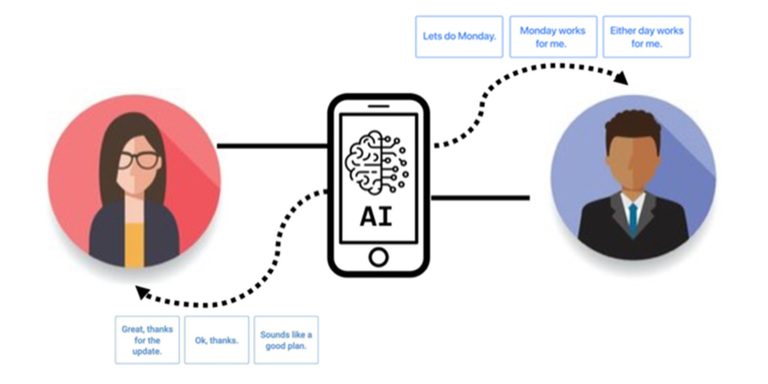
AI-powered communication works by using AI to understand what a person says or writes and then provide a useful response.
Simple Steps:
- User Sends a Message – A person sends a text, voice message, or question.
- AI Understands It – AI reads or listens to the message and understands what the user wants.
- AI Processes the Information – The system checks the information and decides what response is needed.
- AI Creates a Response – AI generates an answer based on the request.
- Response Is Sent – The answer is shown or spoken to the user.
For example, when you ask an AI chatbot a question, it understands your words, processes the request, and quickly gives you an answer.
Examples of AI-Powered Communication
AI-powered communication is already part of many everyday activities. Here are some simple examples:
- AI Chatbots – Websites and apps use AI chatbots to answer customer questions instantly.
- AI Writing Assistants – AI can help write emails, messages, reports, blogs, and social media posts.
- Voice Assistants – AI assistants can understand spoken questions and respond using voice.
- AI Translation – AI can translate conversations, emails, and documents between different languages.
- Smart Email Tools – AI can summarize emails, suggest replies, and help organize important messages.
- Customer Support – AI can answer common customer questions 24/7 and direct complex issues to human agents.
- AI Meeting Assistants – AI can record meetings, create summaries, and identify important action points.
- Personalized Communication – Businesses can use AI to create personalized messages based on a customer’s interests and needs.
- AI-to-AI Communication – Different AI systems can exchange information and work together to complete tasks automatically.
- Multimodal Communication – Modern AI can communicate using text, voice, images, and other types of information, making interactions more natural.
Benefits of AI-Powered Communication
AI-powered communication is changing how people and businesses communicate. It can make communication faster, easier, more efficient, and more personalized.
1. Faster Responses
AI can understand questions and provide answers within seconds. This is especially useful for customer support and online services.
2. 24/7 Communication
AI chatbots and virtual assistants can work day and night, allowing users to get help outside normal business hours.
3. Saves Time
AI can handle repetitive tasks such as answering common questions, writing emails, and summarizing messages.
4. Improves Productivity
By handling routine communication, AI allows employees to spend more time on important and creative work.
5. Personalized Messages
AI can create personalized communication based on customer needs, interests, and previous interactions.
6. Supports Multiple Languages
AI-powered translation can help people communicate across different languages and make global communication easier.
7. Better Customer Service
Businesses can use AI to answer frequently asked questions, provide basic support, and guide customers quickly.
8. Reduces Workload
AI can manage large numbers of messages at the same time, reducing pressure on customer service teams.
9. Consistent Communication
AI can provide consistent responses to common questions, helping businesses maintain a standard communication style.
10. Easy Access to Information
People can ask questions in natural language and receive useful information without spending a lot of time searching.
Conclusion
AI-powered communication offers many benefits, from faster responses and 24/7 support to better productivity and personalized communication. However, human involvement is still important for emotional, sensitive, and complex conversations. The best results come from combining AI efficiency with human understanding.
AI-Powered Communication in Business
Businesses are using AI communication tools to improve customer service, marketing, sales, and internal communication.
For example, an online store can use an AI chatbot to answer questions about products, delivery, and returns. Marketing teams can use AI to create personalized messages for different customers.
AI can also summarize meetings, organize information, and help employees communicate more efficiently
AI Communication vs Traditional Communication
AI communication and traditional communication both help people share information, but they work in different ways. AI communication uses artificial intelligence to automate and support conversations, while traditional communication mainly depends on human interaction.
| Feature | AI Communication | Traditional Communication |
|---|---|---|
| Speed | Very fast responses | Can take more time |
| Availability | Often available 24/7 | Usually depends on people and working hours |
| Human Interaction | Limited human involvement | Direct human interaction |
| Automation | Can automate repetitive tasks | Mostly handled manually |
| Personalization | Can personalize messages using data | Usually personalized by people |
| Language Support | Can translate and understand multiple languages | May require a human translator |
| Cost | Can reduce costs for repetitive tasks | May require more staff |
| Emotions | Limited understanding of human emotions | Better emotional understanding |
| Complex Problems | Useful for many routine tasks | Better for sensitive or complex situations |
| Examples | AI chatbots, voice assistants, AI email tools | Phone calls, face-to-face meetings, emails |
Which One Is Better?
Neither is always better. AI communication is ideal for speed, automation, and routine tasks, while traditional communication is better when empathy, trust, creativity, and human judgment are important.
The best approach is often to combine AI with human communication. AI can handle simple and repetitive tasks, while people can focus on meaningful conversations and complex decisions.
Challenges of AI-Powered Communication
Although AI-powered communication makes conversations faster and easier, it also comes with some challenges. Understanding these issues is important for using AI responsibly.
1. Privacy Concerns
AI systems may process personal messages, customer information, and other sensitive data. Proper data protection is important to keep this information safe.
2. Incorrect Information
AI can sometimes provide wrong, incomplete, or misleading answers. Important information should always be checked before making decisions.
3. Lack of Human Emotion
AI can understand words and context, but it may not fully understand human emotions, feelings, or personal experiences like another person can.
4. Security Risks
AI communication systems can become targets for cyberattacks. Strong security measures are needed to protect users and communication data.
5. Language and Cultural Differences
AI may misunderstand slang, local expressions, accents, or cultural meanings. This can sometimes lead to confusing communication.
6. Overdependence on AI
Relying too much on AI may reduce direct human interaction and important communication skills.
7. Bias in AI Responses
AI systems can sometimes produce biased or unfair responses because of problems in their training data or design.
8. Lack of Personal Connection
Automated messages may feel less personal than communication with a real person, especially in customer service or sensitive situations.
9. Technical Problems
AI tools depend on software, internet connections, and other technology. Technical failures can interrupt communication.
10. Human Oversight Is Still Important
AI should not always work independently. Human review is important for sensitive, complex, or high-impact communication.
Conclusion
AI-powered communication offers many benefits, but it should be used carefully. The best results come from combining AI’s speed and efficiency with human judgment, empathy, and creativity.
The Future of AI-Powered Communication
The future of AI-powered communication is likely to become even more interactive. AI systems will increasingly understand text, voice, images, and video together.
AI assistants may also become better at remembering context, understanding user needs, and helping people complete communication tasks automatically.
However, human communication will remain important. AI is best viewed as a tool that supports people rather than completely replacing human interaction.
Why AI-Powered Communication Matters
AI-powered communication is making it easier to connect, share information, and solve problems. It can save time, improve customer service, and help people communicate across languages.
As AI technology continues to develop, businesses and individuals will have more opportunities to use intelligent communication tools in their daily lives.
FAQs
What is AI-powered communication?
AI-powered communication uses artificial intelligence to help people and businesses create, understand, and respond to messages.
What are the main benefits of AI communication?
The main benefits include faster responses, 24/7 availability, better productivity, personalized messages, and reduced workload.
How does AI improve communication?
AI can automate repetitive tasks, answer questions quickly, translate languages, and help organize information.
Can AI communication save time?
Yes. AI can handle routine communication tasks such as answering common questions, writing emails, and creating summaries.
Can AI communicate in different languages?
Yes. Many AI tools can understand and translate multiple languages, making communication easier across countries.
Is AI communication useful for businesses?
Yes. Businesses can use AI for customer support, marketing, emails, sales, and internal communication.
Can AI replace human communication?
No. AI can support many communication tasks, but human empathy, emotions, creativity, and judgment are still important.
Is AI communication available 24/7?
Many AI-powered communication systems can operate 24/7 without requiring a human employee to be available.
What are the challenges of AI communication?
Common challenges include privacy concerns, incorrect information, security risks, bias, and limited emotional understanding.
What is the future of AI-powered communication?
AI communication is expected to become more natural, personalized, and capable of understanding text, voice, images, and other forms of information.