
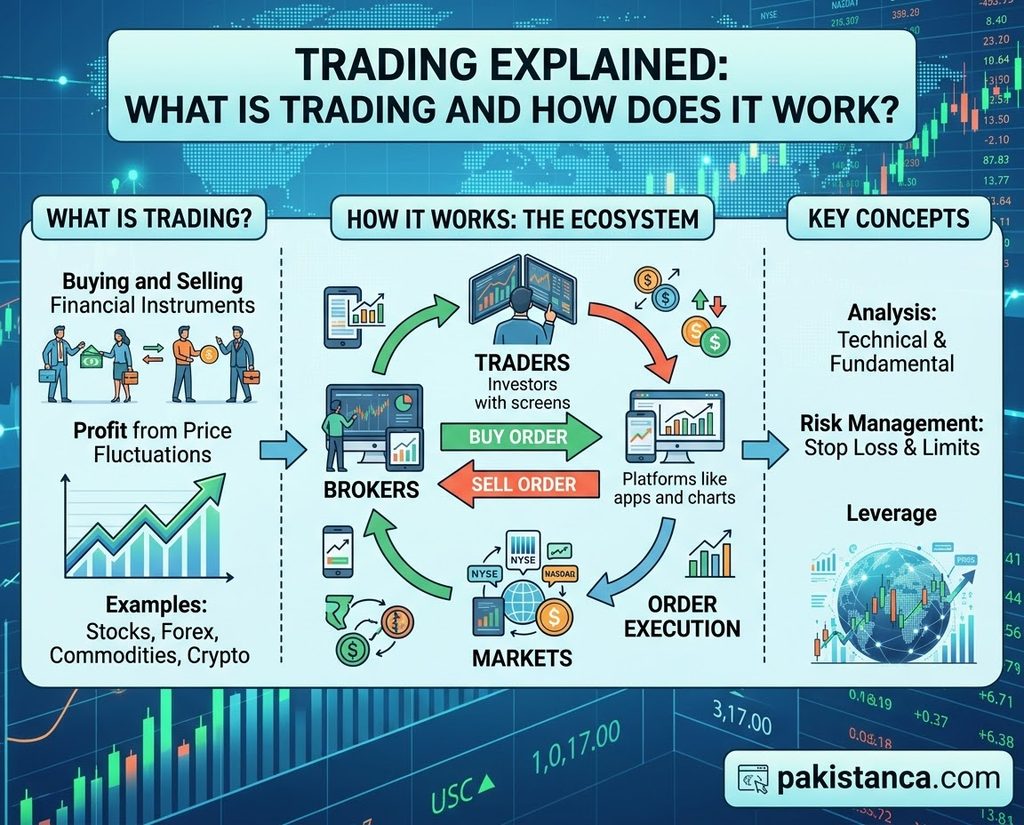
Trading means buying and selling an asset with the goal of making a profit from changes in its price. People can trade different assets, including stocks, currencies, cryptocurrencies, commodities, and other financial products.
What Is Trading?
Trading is the process of buying an asset at one price and selling it later at another price. If the selling price is higher than the buying price, the trader may make a profit. However, if the price falls, the trader can also lose money.
For example, if you buy a stock for $100 and sell it for $110, your profit is $10 before fees and taxes.
How Does Trading Work?
Trading usually takes place through a broker or trading platform. A trader studies the market and decides when to buy or sell.
The basic process is:
- Choose an asset to trade.
- Research the market.
- Decide whether to buy or sell.
- Place a trading order.
- Monitor the position.
- Close the trade when appropriate.
- Calculate the profit or loss.
Common Types of Trading
1. Stock Trading
Stock trading involves buying and selling shares of companies such as technology, banking, automobile, and energy companies.
2. Cryptocurrency Trading
Crypto trading involves buying and selling digital assets such as Bitcoin and other cryptocurrencies. Crypto markets can be highly volatile, so prices can change quickly.
3. Forex Trading
Forex, or foreign exchange trading, involves trading currency pairs such as EUR/USD and GBP/USD.
4. Commodity Trading
Commodity trading includes assets such as gold, silver, oil, and agricultural products.
5. Day Trading
Day traders generally open and close trades within the same day, trying to benefit from short-term price movements.
6. Swing Trading
Swing traders usually hold positions for several days or weeks, looking for larger price movements.
Why Do People Trade?
People trade for different reasons. Some traders want to earn short-term profits, while others use trading as part of a longer-term investment strategy.
However, trading is not guaranteed income. Markets can move unexpectedly, and losses are possible.
Trading vs Investing
Trading and investing are related but different.
Trading generally focuses on shorter-term price movements and may involve frequent buying and selling.
Investing usually focuses on holding assets for a longer period, with the aim of benefiting from long-term growth or income.
What Do Beginners Need to Start Trading?
A beginner normally needs:
- A reliable trading platform or broker
- A basic understanding of financial markets
- A trading strategy
- Risk-management rules
- A realistic budget
- Knowledge of trading fees
- Patience and discipline
Beginners should learn the basics before risking real money. Using a demo account can also help new traders practice.
Is Trading Risky?
Yes. Trading involves financial risk. Prices can rise or fall quickly, and traders can lose some or all of the money they put into a trade.
Risk can be particularly high in highly volatile markets and when leverage is used. Never trade money you cannot afford to lose.
FAQs
- What is trading?
Trading is the process of buying and selling financial assets to potentially make a profit from price changes. - How does trading work?
A trader buys an asset at one price and may sell it later at a higher price. If the price falls, the trader can face a loss. - What can you trade?
Common markets include stocks, cryptocurrencies, currencies, commodities, and other financial products. - Is trading profitable?
Trading can be profitable, but profits are not guaranteed. Traders can also lose money. - Is trading suitable for beginners?
Beginners can learn trading, but they should understand the market, practice with a demo account, and learn risk management before using real money. - What is day trading?
Day trading involves opening and closing trades within the same trading day. - What is the difference between trading and investing?
Trading usually focuses on shorter-term price movements, while investing generally involves holding assets for a longer period. - Is cryptocurrency trading risky?
Yes. Cryptocurrency prices can be highly volatile, meaning they can rise or fall significantly in a short period. - How much money is needed to start trading?
The amount depends on the market, broker, and trading strategy. Beginners should only use money they can afford to lose. - What is the most important rule for new traders?
Learn before risking real money, use proper risk management, and never assume that trading guarantees income.