
Top Technology Trends in 2026
Technology is moving faster than ever, and 2026 is shaping up to be an exciting year for innovation. From artificial intelligence and smart devices to electric vehicles and advanced cybersecurity, new technologies are changing how people work, communicate, travel, and live.
In this friendly guide, we take a quick snapshot of the top new technology trends in 2026 and explain why they matter
1. Artificial Intelligence and AI Agents
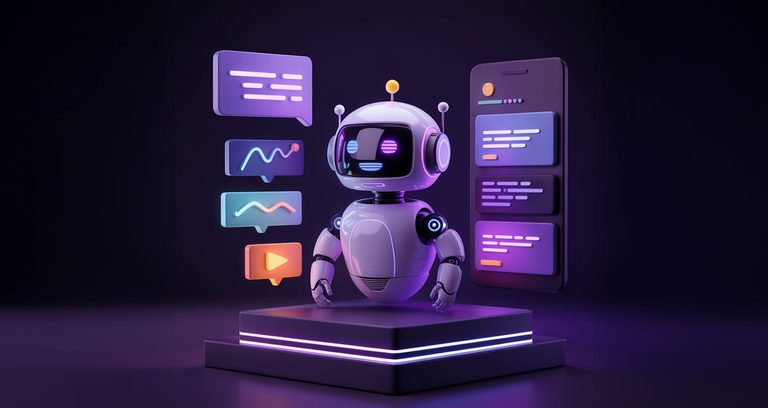
.Artificial intelligence remains one of the biggest technology trends in 2026. AI is moving beyond simple chatbots and search tools toward AI agents that can perform tasks, analyze information, automate workflows, and assist users with complex decisions.
Businesses are increasingly using AI for customer service, content creation, software development, data analysis, marketing, and automation.
2. Generative AI
Generative AI continues to expand across multiple industries. Modern AI systems can create text, images, video, audio, presentations, software code, and other digital content.
In 2026, generative AI is becoming more integrated into smartphones, computers, business software, education platforms, and creative tools.
3. AI-Powered Smartphones and PCs
Smartphones and personal computers are becoming more intelligent through on-device AI. New devices can offer features such as AI-powered photo editing, real-time translation, voice assistance, document summarization, and personalized recommendations.
The rise of AI PCs and AI smartphones is expected to make artificial intelligence a normal part of everyday computing.
4. Humanoid Robots and Advanced Robotics
Robotics is another major technology trend to watch in 2026. Humanoid robots are being developed for industrial, commercial, logistics, and potentially household applications.
Robots powered by advanced AI can increasingly understand instructions, recognize objects, navigate environments, and perform repetitive physical tasks.
5. Electric Vehicles and Smart Mobility
Electric vehicles (EVs) continue to transform the automotive industry. Manufacturers are focusing on longer driving ranges, faster charging, improved battery technology, and smarter vehicle software.
Modern EVs are also becoming connected platforms with advanced driver-assistance systems, over-the-air updates, smart navigation, and AI-powered feature
6. Next-Generation Battery Technology
Battery innovation is critical for electric vehicles, smartphones, renewable energy storage, and portable electronics.
In 2026, research and development is focused on improving energy density, charging speed, battery lifespan, safety, and production costs. New battery technologies could make electric transportation and energy storage more practical in the future.
7. 5G and Advanced Connectivity
Faster and more reliable connectivity continues to support smart cities, connected vehicles, industrial automation, cloud services, and immersive digital experiences.
As advanced mobile networks develop, businesses and consumers can benefit from lower latency and improved connectivity for increasingly connected devices.
8. Extended Reality (AR, VR and Mixed Reality)
Augmented reality (AR), virtual reality (VR), and mixed reality are continuing to develop in 2026.
These technologies are being used for gaming, education, training, design, healthcare, entertainment, remote collaboration, and virtual experiences. Lighter hardware and better displays could make immersive technology more accessible.
9. Quantum Computing
Quantum computing remains an important emerging technology. Unlike traditional computers, quantum computers use quantum-mechanical principles to process certain types of problems in fundamentally different ways.
Although large-scale practical quantum computing is still developing, researchers and technology companies are exploring applications in areas such as materials science, optimization, chemistry, and cryptography.
10. Cybersecurity and AI Security
As digital services and AI systems become more widespread, cybersecurity is becoming increasingly important. Organizations are investing in advanced security tools designed to detect threats, protect data, secure cloud infrastructure, and identify suspicious activity.
AI is also being used on both sides of cybersecurity, helping security teams detect potential threats while creating new challenges that require stronger protection
11. Smart Homes and IoT
The Internet of Things (IoT) continues to connect everyday devices. Smart cameras, appliances, lighting systems, security devices, thermostats, and other connected products can communicate through modern networks.
AI is making smart-home technology more useful by allowing devices to automate routines and respond more intelligently to user behavior.
12. Cloud and Edge Computing
Cloud computing remains essential for modern businesses and digital services. At the same time, edge computing is gaining importance by processing data closer to where it is generated
This combination can help support applications that require fast responses, including autonomous systems, industrial automation, smart cities, and connected devices.
Why Technology Trends Matter in 2026
The latest technology trends are not only about new gadgets. They are changing how businesses operate and how consumers interact with digital services.
AI can automate repetitive tasks, EVs are transforming transportation, robotics can support industrial operations, and connected devices are creating smarter environments. These technologies are also creating new careers, businesses, and investment opportunities
Future of Technology
The future of technology will likely be shaped by the combination of several major innovations rather than a single breakthrough. AI, robotics, advanced batteries, connectivity, cloud computing, cybersecurity, and smart devices are increasingly working together.
As these technologies mature, consumers can expect smarter devices, more personalized digital experiences, increasingly automated workplaces, and more connected transportation systems.
Conclusion
The top new technology trends in 2026 show how quickly the digital world is evolving. Artificial intelligence, AI agents, robotics, electric vehicles, advanced batteries, quantum computing, cybersecurity, extended reality, and smart connected devices are among the most important technologies to watch.
For consumers and businesses, understanding these trends can help them prepare for the opportunities and challenges of the next generation of technology.