
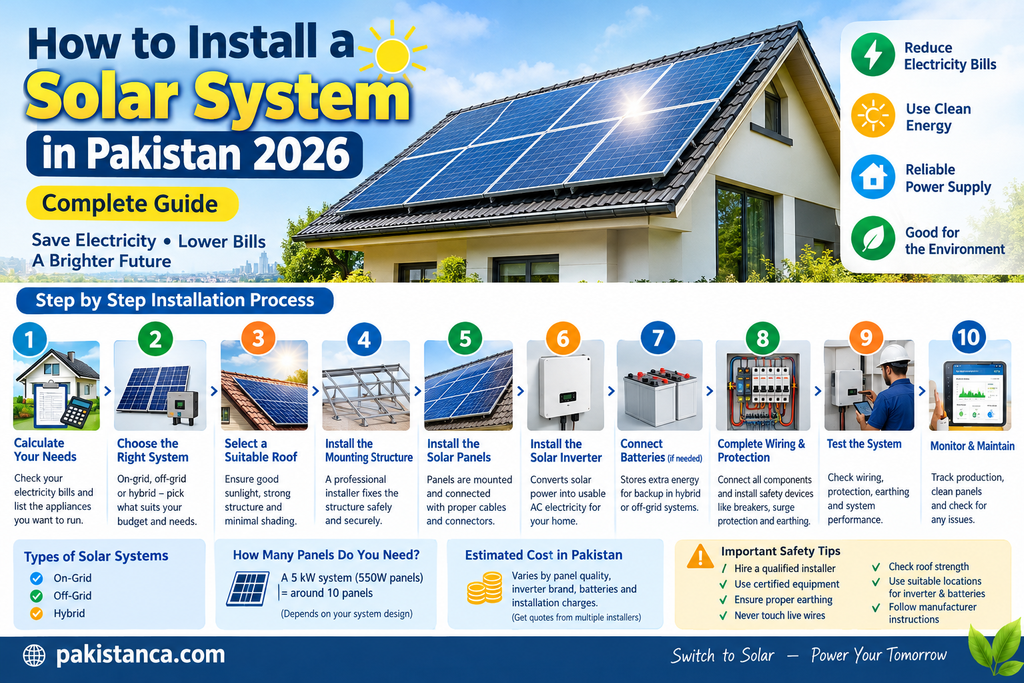
Installing a solar system at home is a smart way to reduce electricity bills in Pakistan. With rising electricity costs, many homeowners are switching to solar energy for a reliable and affordable power supply. If you want to learn how to install a solar system, this simple guide explains the required equipment, installation steps, costs to consider, and important safety tips.
A solar power system uses sunlight to generate electricity for your home. You can use this electricity to run fans, lights, refrigerators, air conditioners, water pumps, and other appliances, depending on your system’s capacity.
What Is a Solar System?
A solar system converts sunlight into electricity through solar panels. The electricity can power your home directly, charge batteries, or connect to the electricity grid, depending on the system type.
There are three main types of solar systems:
- On-Grid Solar System: Connects to the electricity grid and generally does not provide backup during a power outage unless specially designed.
- Off-Grid Solar System: Uses batteries to store electricity and can operate independently of the grid.
- Hybrid Solar System: Combines solar panels, battery storage, and grid connectivity, depending on the configuration.
Equipment Required to Install a Solar System
Before installation, arrange the following equipment according to your home’s electricity needs.
| Equipment | Main Purpose |
|---|---|
| Solar Panels | Generate electricity from sunlight |
| Solar Inverter | Converts solar electricity into usable power |
| Batteries | Store electricity for backup, if required |
| Mounting Structure | Holds solar panels securely |
| DC and AC Cables | Carry electricity between components |
| Protection Devices | Help protect against electrical faults and surges |
| Earthing System | Provides an essential electrical safety path |
| Monitoring System | Tracks solar power generation and usage |
How to Install a Solar System Step by Step
1. Calculate Your Electricity Requirements
First, check your electricity bills and identify the appliances you want to operate using solar power.
For example, list your fans, lights, refrigerator, television, water pump, and air conditioner. Check their power ratings and how many hours you use them daily.
This information helps determine the suitable solar panel capacity, inverter size, and battery requirements.
2. Choose the Right Solar System
Select a system according to your budget and electricity needs.
- Choose an on-grid system if your main goal is reducing electricity bills and grid power is available.
- Choose an off-grid system if you need an independent power supply with batteries.
- Choose a hybrid system if you want to combine solar generation, grid electricity, and battery backup.
Consider local electricity rules and approval requirements before choosing a grid-connected system.
3. Select a Suitable Roof
Choose a strong roof or open area that receives sufficient sunlight throughout the day.
Make sure the installation area has minimal shading from trees, walls, and nearby buildings. Check the roof’s condition and load-bearing capacity before installing the mounting structure.
In Pakistan, panels are commonly positioned facing south to receive good sunlight, but the best orientation depends on the location, roof design, and shading.
4. Install the Mounting Structure
A professional installer secures the mounting structure to the roof. The structure holds the panels at a suitable angle and protects them against wind and weather.
Use corrosion-resistant materials and suitable waterproofing to help prevent roof leakage.
5. Install the Solar Panels
After securing the structure, the installer mounts the solar panels and connects them using compatible cables and connectors.
Panels should be positioned to reduce shading and allow access for cleaning and maintenance.
The installer must follow the panel manufacturer’s instructions and electrical safety standards.
6. Install the Solar Inverter
The inverter converts the electricity produced by solar panels into usable AC electricity for household appliances.
Install it in a dry, well-ventilated location according to the manufacturer’s clearance and temperature requirements.
The inverter must match the system voltage, panel configuration, and intended battery setup.
7. Connect Batteries If Required
If you choose a hybrid or off-grid solar system, batteries can store excess solar energy for later use.
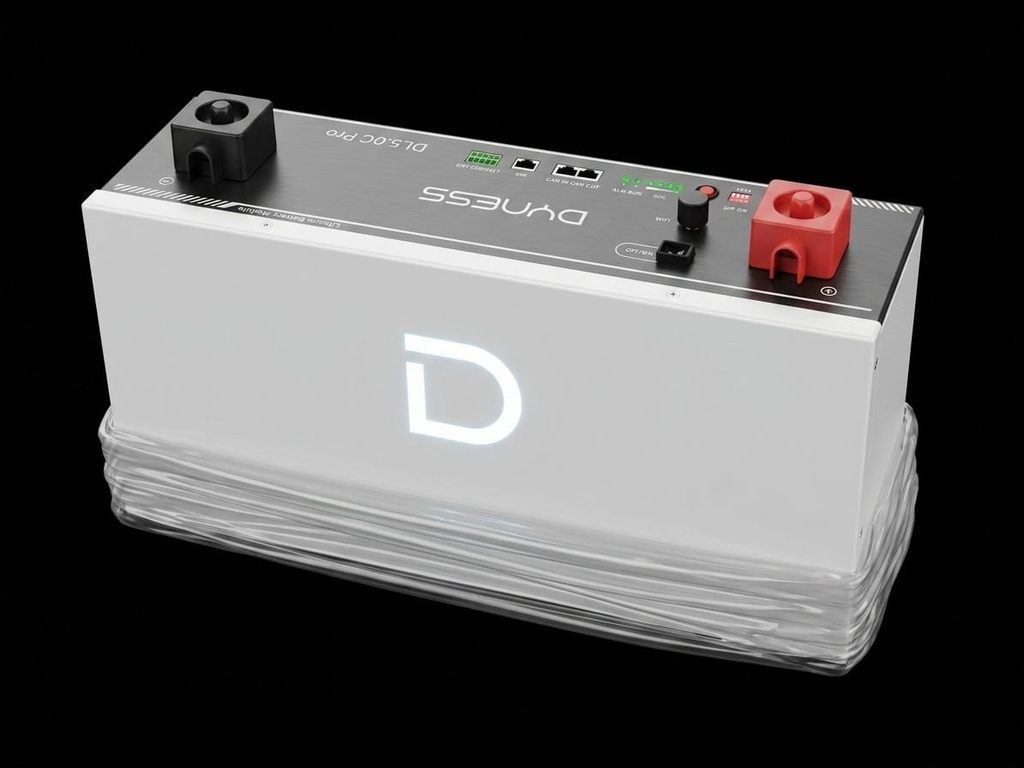
Select a battery with compatible voltage, capacity, and battery-management requirements. Lithium batteries and lead-acid batteries have different installation and maintenance needs.
A qualified installer should configure the battery and inverter according to their manufacturers’ instructions.
8. Complete Electrical Wiring and Protection
The installer connects the solar panels, inverter, distribution board, and batteries where applicable.
Suitable circuit breakers, isolators, surge protection, earthing, and other protective devices must be installed according to the system design and local electrical requirements.
Important: Solar panels can generate dangerous DC voltage in sunlight. Do not attempt live wiring or inverter connections yourself. Use a qualified solar electrician.
9. Test the Solar System
Before switching the system into normal operation, the installer should inspect the wiring, protection devices, earthing, mounting structure, and inverter settings.
The installer should also confirm that the system is generating electricity correctly and that monitoring features are working.
Keep the installation documents, equipment warranties, and system settings for future reference.
10. Monitor Solar Power Generation
Once the system is operating, monitor daily electricity production through the inverter display or monitoring application.
Clean panels when needed, check for visible damage, and arrange professional inspections if you notice unusual performance or warning messages.
How Many Solar Panels Do You Need?
The number of panels depends on the total solar capacity and the wattage of each panel.
For example, a 5 kW system using 550-watt panels would require approximately 10 panels, providing 5.5 kW of panel capacity before considering inverter limits and system design.
| Solar Panel Capacity | Approximate Number of 550W Panels |
|---|---|
| 3 kW | 6 panels |
| 5 kW | 10 panels |
| 8 kW | 15 panels |
| 10 kW | 19 panels |
These figures are estimates. The actual number depends on the selected equipment, available roof space, inverter specifications, and design requirements.
How Much Does Solar Installation Cost in Pakistan?
The cost of a solar system depends on panel quality, inverter brand, batteries, mounting materials, installation charges, and the complexity of the project.
Battery backup generally increases the total cost. Roof height, cable length, and electrical upgrades can also affect the final price.
Before purchasing a system, compare written quotations from multiple installers. Ask for a complete breakdown of equipment, installation, warranty, and after-sales support.
Important Safety Tips for Solar Installation
Follow these safety tips when installing a solar system:
- Hire a qualified and experienced solar installer.
- Use certified equipment from reputable suppliers.
- Ensure proper earthing and electrical protection.
- Never touch exposed electrical wires or connectors.
- Check roof strength before mounting panels.
- Keep the inverter and batteries in suitable locations.
- Follow manufacturer instructions for cleaning and maintenance.
- Confirm applicable grid-connection and export approval requirements before connecting the system.
Benefits of Installing a Solar System
Solar energy offers several benefits for homeowners in Pakistan.
- Lower electricity bills: Solar power can reduce the amount of electricity purchased from the grid.
- Renewable energy: Solar panels generate electricity from sunlight.
- Battery backup: Compatible hybrid and off-grid systems can supply stored electricity during outages.
- Long-term value: Quality equipment can provide years of service when properly installed and maintained.
- Flexible capacity: You can choose a system according to your budget and energy requirements.
Conclusion
Installing a solar system can help Pakistani households manage electricity costs and use renewable energy. The key is to calculate your electricity requirements, select suitable equipment, prepare the roof, and hire a qualified installer.
Before making a purchase, compare system designs, equipment warranties, installation costs, and local grid-connection rules. A properly designed solar system can provide reliable performance for many years.
FAQs.
1. How do I install a solar system at home?
Calculate your electricity needs, choose a suitable system, install the mounting structure and panels, connect the inverter and optional batteries, and complete electrical testing with a qualified installer.
2. How many solar panels are needed for a 5 kW system?
Approximately 10 panels of 550 watts each provide 5.5 kW of panel capacity. The final design depends on the inverter and installation requirements.
3. Can I install a solar system without batteries?
Yes. An on-grid solar system can operate without batteries. However, a standard grid-tied system generally shuts down during a power outage for safety.
4. Which solar system is best for a home in Pakistan?
The best option depends on your electricity usage, budget, backup requirements, and grid availability. Hybrid systems are useful when battery backup is important.
5. How long does solar installation take?
A typical residential installation may take one to several days, depending on system size, roof conditions, electrical work, and any required approvals.
6. Can solar panels run an air conditioner?
Yes, if the solar system and inverter are appropriately sized for the air conditioner’s running and starting power requirements. Battery backup may be needed for operation at night or during outages.
7. Do solar panels work on cloudy days?
Yes, solar panels can generate electricity in cloudy weather, but their output is usually lower than on sunny days.
8. Do solar panels require maintenance?
Yes. Panels should be kept reasonably clean, and the system should be inspected periodically for damage, loose connections, and performance problems.
9. Is professional installation necessary?
Professional installation is strongly recommended because solar systems involve potentially dangerous DC and AC electricity, rooftop work, and electrical protection requirements.


1 thought on “How to Install a Solar System in Pakistan 2026 Complete Guide”