Educational documents are important when applying for a student visa, overseas education, immigration, or some work visa applications. These documents help universities, embassies, and immigration authorities verify your education and qualifications.
The exact documents required can vary depending on the country, university, and type of visa. Applicants should prepare their educational records early to avoid delays.
What Are Educational Documents?
Educational documents are official records that show your academic qualifications. They can include certificates, degrees, diplomas, transcripts, and mark sheets issued by recognized educational institutions.
Common Educational Documents Required
Applicants may be asked to provide some or all of the following:
- Matriculation certificate
- Intermediate certificate
- Bachelor’s degree
- Master’s degree
- Diploma or professional qualification
- Marksheets
- Academic transcripts
- Degree certificate
- Provisional certificate, if the final degree is not available
- Educational institution or university verification
Why Are Educational Documents Important?
Educational documents can help prove that an applicant meets the academic requirements for a course, job, or immigration program.
For student visas, universities may use these documents to confirm previous education before issuing an admission or enrollment document.
Educational Documents for Student Visa
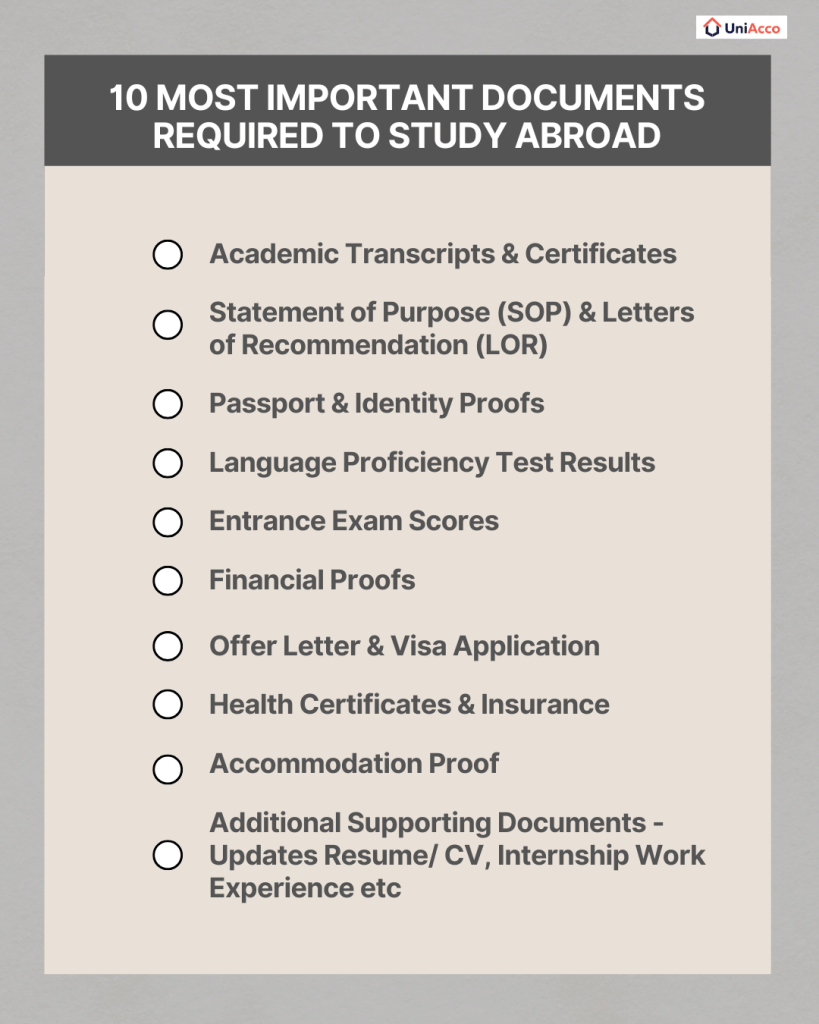
Students applying abroad may commonly need their previous academic certificates and transcripts. Depending on the destination, they may also need an admission letter, proof of language ability, financial documents, and other supporting papers.
Some countries or institutions may ask for attested or verified educational documents.
Attestation and Verification
In some cases, educational documents need to be verified or attested before they can be submitted to a foreign university or embassy.
Applicants should check whether their documents need verification from the relevant educational authority, higher education authority, foreign affairs authority, or embassy.
Translation of Educational Documents
If your educational documents are not in the language accepted by the destination country, an official translation may be required.
It is important to check the embassy or university requirements before getting documents translated.
Tips for Preparing Educational Documents
- Keep original certificates and degrees safe.
- Prepare clear copies of all documents.
- Check that your name matches your passport.
- Keep academic transcripts and marksheets available.
- Verify whether attestation is required.
- Use an approved translator when translation is required.
- Check the latest requirements before submitting your visa application.
FAQs
1. What are educational documents for a visa?
They are academic records such as certificates, degrees, transcripts, and marksheets used to verify your education.
2. Which educational documents are commonly required?
Matric, Intermediate, Bachelor’s, Master’s certificates, degrees, marksheets, and academic transcripts may be required.
3. Are educational documents required for a student visa?
Yes, many student visa applications require academic documents to confirm the applicant’s educational background.
4. Do educational documents need attestation?
Sometimes. The requirement depends on the destination country, university, and visa category.
5. Is an educational document translation required?
If your documents are not in an accepted language, an official translation may be required.
6. Can I submit copies instead of original documents?
Some applications accept copies, while others may require originals for verification. Always check the specific requirements.
7. What if my final degree is not available?
A provisional certificate or other official proof of qualification may sometimes be accepted.
8. Should my name match my passport?
Yes. Your name and other personal details should be consistent across your passport and educational documents.