
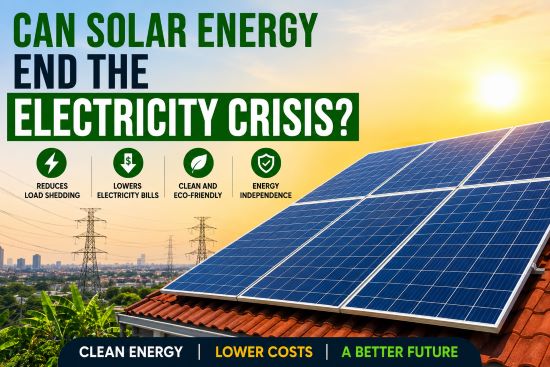
Electricity shortages, rising power bills and frequent load shedding have become major problems in many countries, especially in Pakistan. Businesses suffer losses, students struggle during outages and households face increasing electricity costs every month. Because of this, many people are now turning toward renewable energy and asking an important question: Can solar energy end the electricity crisis?
Solar power is rapidly becoming one of the most effective solutions for energy shortages. With lower installation costs, better technology and growing awareness, solar energy is helping countries reduce dependence on expensive fuel-based electricity generation.
What Is Solar Energy?
Solar energy is power generated from sunlight through solar panels. These panels convert sunlight into electricity that can be used in homes, offices, factories and commercial buildings.
Unlike traditional electricity generation, solar power does not require oil, gas or coal. It is a clean and renewable source of energy that can produce electricity for decades after installation.
Why Are Countries Facing Electricity Crises?
Many nations face electricity shortages due to increasing energy demand and expensive fuel imports. In developing countries, outdated infrastructure and population growth also put pressure on power systems.
Common reasons behind the electricity crisis include:
- Rising fuel prices
- Increasing population
- Heavy dependence on imported energy
- Weak electricity infrastructure
- High power demand during summer
These problems lead to higher electricity tariffs and frequent power outages.
How Solar Energy Can Help
Solar energy offers several advantages that can reduce electricity problems and improve energy stability.
Lower Dependence on Fuel
Traditional power plants rely heavily on oil, gas and coal. Solar energy reduces this dependence because sunlight is free and available every day.
Reduced Electricity Bills
After installation, solar systems generate electricity at minimal cost. Homes and businesses can significantly reduce monthly electricity expenses.
Less Load Shedding
When more people generate their own electricity through solar panels, pressure on the national grid decreases. This helps reduce load shedding and power shortages.
Clean and Environment-Friendly
Solar energy produces electricity without pollution or harmful carbon emissions, making it one of the cleanest energy sources available.
Is Solar Energy Enough to Completely End the Crisis?
Solar power has huge potential, but it cannot solve every energy problem alone. Some challenges still exist.
Weather Dependency
Solar panels depend on sunlight, so electricity generation decreases during cloudy weather and at night.
Initial Installation Cost
Although prices have fallen in recent years, installing a solar system can still be expensive for some households.
Battery Storage Issues
Energy storage technology is improving, but batteries remain costly for large-scale electricity storage.
Despite these challenges, solar technology is advancing rapidly, making systems more affordable and efficient every year.
Solar Energy Growth Around the World
Many countries are investing heavily in solar energy to reduce electricity shortages and fuel dependence.
China
China is the world leader in solar energy production and manufacturing.
India
India is expanding solar projects quickly to meet growing electricity demand.
Germany
Germany has successfully integrated renewable energy into its national power system.
Pakistan
In Pakistan, rising electricity prices are pushing more households and businesses toward solar panel installation and net metering systems.
The Future of Solar Power
Experts believe solar energy will play a major role in the future of global electricity production. Better batteries, improved solar panels and smart grid systems are making renewable energy more practical than ever before.
Governments and private companies are also investing heavily in clean energy projects to reduce environmental pollution and energy costs.



1 thought on “Can Solar Energy End the Electricity Crisis?”