AI-to-AI communication is becoming an important part of modern technology. Instead of humans giving every instruction, AI systems can communicate with other AI systems to share information, complete tasks, and make decisions.
From customer service and business automation to smart devices and AI agents, this technology can make digital systems faster and more efficient.
What Is AI-to-AI Communication?
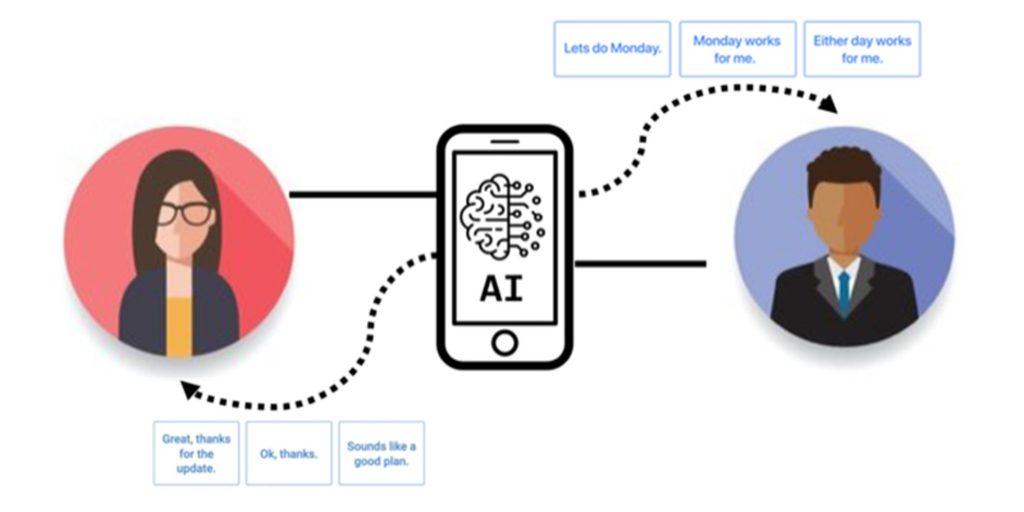
This communication means one artificial intelligence system communicating directly with another AI system.
For example, one AI agent may understand a customer’s request, while another AI system checks product availability. The two systems can exchange information and work together without requiring a human to manage every step.
In simple words, AI systems can talk, exchange data, and cooperate to complete a task.
How Does AI-to-AI communication Work?
AI-to-AI communication works by allowing different AI systems or AI agents to exchange information, understand instructions, and work together to complete a task.
A simple process looks like this:
- One AI receives a task – The first AI understands what needs to be done.
- The task is divided – It identifies which parts require help from other AI systems.
- AI sends information – The first AI sends data or instructions to another AI using software tools, APIs, or communication protocols.
- Another AI processes the request – The second AI analyzes the information and performs its specific task.
- Results are shared – The second AI sends its result back to the first AI or another AI agent.
- AI systems work together – The agents combine the information to complete the overall task.
- Final result is produced – The system provides the completed result to the user or another application.
Simple Example
Imagine an online shopping assistant:
Customer → Shopping AI → Product AI → Price AI → Delivery AI → Final Answer
The shopping AI understands the customer’s request, the product AI finds suitable products, the price AI checks prices, and the delivery AI provides shipping information. The systems communicate with each other to create one useful response.
In simple words, AI-to-AI allows different AI systems to act like a team, with each AI handling a specific job.
Benefits of AI-to-AI communication
AI-to-AI communication allows different AI systems to work together and share information. This can make many digital tasks faster, smarter, and easier.
1. Faster Task Completion
AI systems can exchange information quickly and complete tasks without waiting for human instructions at every step.
2. Better Automation
Different AI agents can handle different parts of a process automatically, reducing repetitive manual work.
3. Improved Productivity
Businesses can use multiple AI systems to manage tasks such as customer support, data analysis, marketing, and scheduling.
4. 24/7 Operation
AI systems can communicate and perform tasks around the clock without needing breaks.
5. Specialized Skills
Each AI agent can focus on a specific job. For example, one AI can analyze data while another handles customer questions.
6. Better Decision Support
AI systems can share information and combine results, helping provide more complete insights for decision-making.
7. Easy Scalability
Organizations can add more AI agents when they need to handle larger workloads.
8. Reduced Human Workload
AI-to-AI communication can handle routine tasks, allowing people to focus on creative, strategic, and important decisions.
9. Faster Information Sharing
AI agents can quickly pass relevant data to one another, helping create smoother digital workflows.
10. Smarter Digital Services
When AI systems work together, they can provide more personalized and efficient services to users.
In simple words, AI-to-AI communication helps AI systems work like a team, making automation faster, more efficient, and more powerful.
Examples .
AI-to-AI communication allows different AI systems or agents to exchange information and work together. Here are some simple real-world examples:
1. AI Customer Service Agents
One AI agent can understand a customer’s question, while another AI searches a company database for the required information. The systems can share the results and provide an answer.
2. AI Shopping Assistants
One AI can understand what a customer wants, while other AI systems check products, prices, stock, and delivery options. They can work together to find the best option.
3. AI in Smart Homes
Different AI-powered systems can communicate to manage lights, temperature, security cameras, and other smart devices based on the user’s needs.
4. AI Business Automation
Multiple AI agents can work together across departments. For example, a sales AI can send customer information to a marketing AI, while another AI prepares a report.
5. AI Healthcare Systems
Different AI systems can process medical information, organize records, assist with scheduling, and provide information to healthcare professionals. Human professionals remain important for medical decisions.
6. Autonomous Vehicles
AI systems inside vehicles can work together to process information from cameras, sensors, navigation systems, and traffic data to support driving decisions.
7. AI Cybersecurity Systems
One AI system can detect unusual activity while another analyzes the event and a third system can help determine an appropriate security response.
8. AI Content Creation
One AI can research a topic, another can organize the information, and another can help create or review the final content.
9. AI Financial Services
Different AI systems can analyze transactions, detect unusual activity, assess risks, and generate reports.
10. AI Agents Working as a Team
In advanced AI systems, several specialized agents can communicate with each other. One agent may act as a planner, another as a researcher, and another as an executor, allowing them to complete a larger task together.
In simple words: AI-to-AI communication allows multiple AI systems to share information, coordinate tasks, and work together like a digital team.
AI-to-AI Communication vs Human-to-AI Communication
AI-to-AI and human-to-AI communication are two different ways artificial intelligence systems interact. The main difference is who is communicating with whom.
| Feature | AI-to-AI Communication | Human-to-AI Communication |
|---|---|---|
| Communication | AI system communicates with another AI | Human communicates with AI |
| Main Purpose | Collaboration and task automation | Getting answers, help, or completing tasks |
| Speed | Usually very fast | Depends on human interaction |
| Human Involvement | May require little or no direct involvement | Human is directly involved |
| Examples | AI agents sharing data and coordinating tasks | User asking a chatbot a question |
| Decision Process | AI systems can coordinate automatically | Human provides instructions or feedback |
| Best For | Automated workflows and complex tasks | Customer support, learning, research, and assistance |
AI-to-AI Communication
In AI-to-AI communication, one AI system exchanges information with another AI system. For example, a planning AI could send a task to a research AI, which then returns information to the planning system.
Human-to-AI Communication
In human-to-AI communication, a person directly interacts with an AI system. For example, a customer may ask a chatbot about an order, or a student may ask an AI assistant to explain a topic.
Which Is Better?
Neither is always better. Human-to-AI communication is useful when people need assistance, answers, or control. AI-to-AI communication is useful when multiple AI systems need to collaborate and automate tasks.
In the future, both approaches may work together, with humans giving instructions while multiple AI agents communicate behind the scenes to complete the task.
FAQs
1. What is this type of communication?
It is a process where intelligent systems exchange information and work together without direct human involvement.
2. How does it work?
Information, instructions, and responses are exchanged through software, APIs, and communication protocols.
3. Why is it useful?
It helps complete tasks faster, improve automation, and reduce repetitive human work.
4. What are the main benefits?
The main benefits include faster information sharing, better coordination, automation, and improved efficiency.
5. Can intelligent systems work together?
Yes, multiple systems can cooperate to complete simple or complex tasks.
6. What are the main challenges?
Security, privacy, compatibility, incorrect information, and lack of human supervision can create challenges.
7. Is it safe?
It can be safe when proper security controls, permissions, monitoring, and human oversight are used.
8. What is the future of this technology?
It is expected to become more common in business automation, smart devices, software, and other digital services.