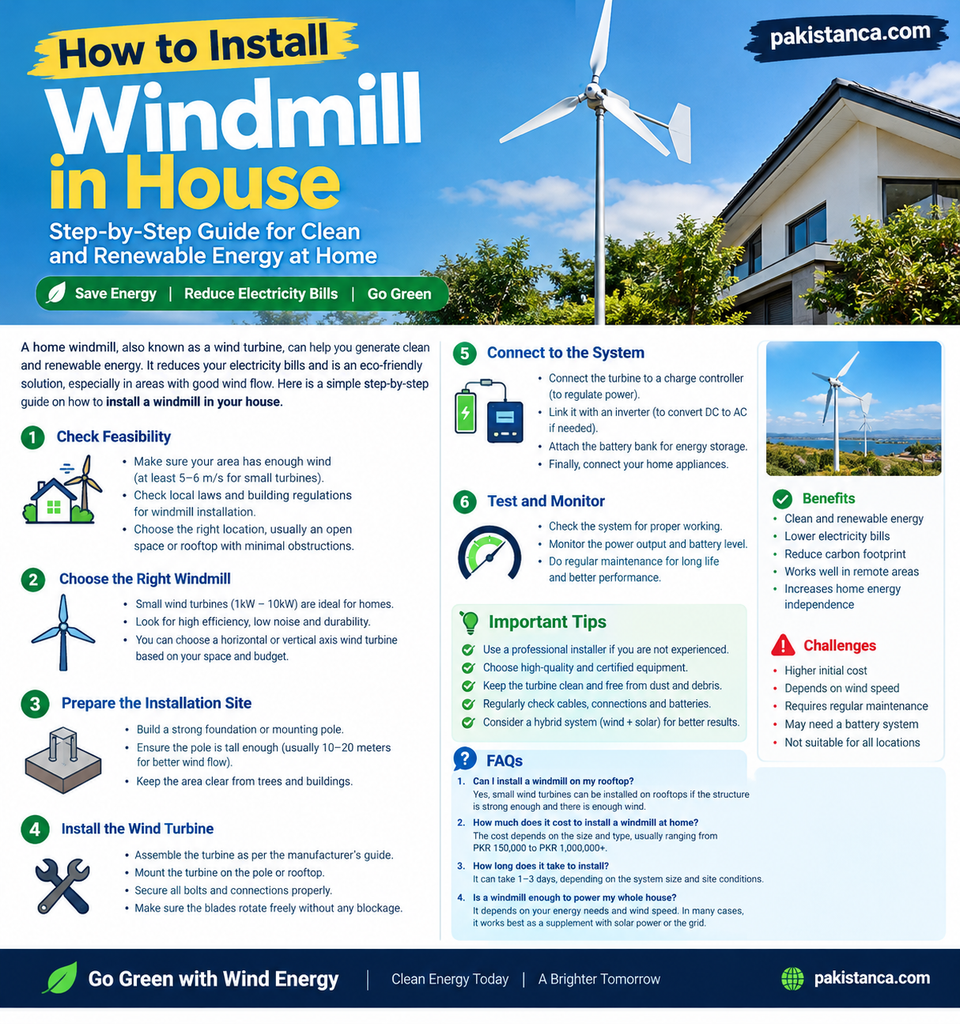
A home windmill, also known as a wind turbine, can help you generate clean electricity using wind energy. It can reduce your electricity bills and provide an alternative source of power for your home.
Installing a windmill at home requires proper planning, suitable wind conditions, the right equipment, and safe electrical connections. In this guide, you will learn how to install a windmill at home, which equipment you need, and how to use wind energy efficiently in Pakistan.
1. Check Wind Conditions in Your Area
Before buying a wind turbine, check whether your area receives enough wind throughout the year. Wind turbines generally perform better in open areas with steady wind and fewer obstacles.
Coastal areas and some open rural locations may offer better conditions than crowded urban neighborhoods.
Important: Do not assume your rooftop has enough wind. Buildings can create turbulence and reduce the turbine’s performance.
2. Choose the Right Wind Turbine
Select a wind turbine according to your electricity needs, available space, and local wind conditions.
Common options include:
- Small wind turbine: Suitable for limited electricity needs.
- Medium wind turbine: May support more household loads when conditions are suitable.
- Hybrid wind and solar system: Combines wind power with solar panels.
- Off-grid wind system: Uses batteries to store electricity for later use.
Check the manufacturer’s rated power, operating wind-speed range, warranty, and safety features before purchasing.
3. Arrange the Required Equipment
You may need the following equipment to install a home wind energy system:
- Wind turbine and blades
- Strong mounting pole or tower
- Concrete foundation and mounting hardware
- Wind charge controller
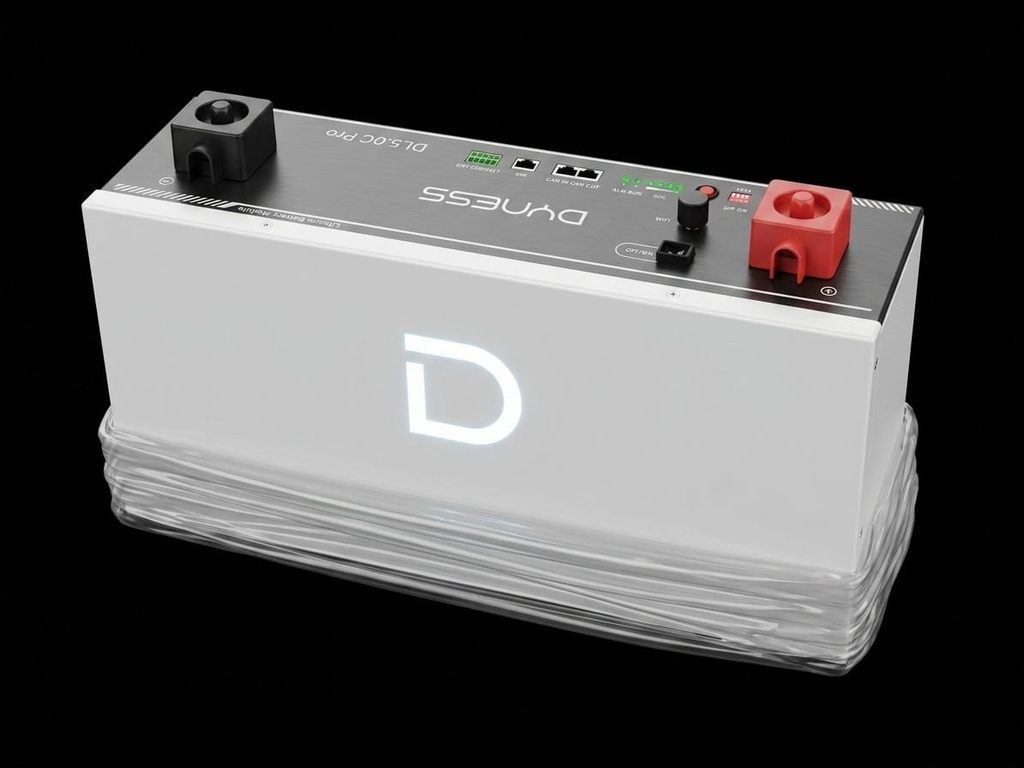
- Battery bank, if energy storage is required
- Compatible inverter, if needed
- Electrical cables, circuit breakers, and disconnect switches
- Earthing and lightning protection equipment
The exact equipment depends on whether your system is grid-connected, battery-based, or part of a hybrid solar setup.
4. Select a Safe Installation Location
Choose a location with good wind exposure and enough clearance around the turbine. Keep it away from nearby buildings, trees, overhead power lines, and areas where falling equipment could injure people.
A ground-mounted tower may perform better than a rooftop installation because it can reach less turbulent wind. However, the best location depends on your property and local conditions.
Check local building rules and obtain any required permissions before installation.
5. Build a Strong Foundation
A wind turbine creates forces from wind pressure, vibration, and the rotation of its blades. Its tower and foundation must safely withstand these forces.
A qualified installer or structural engineer should assess the soil, tower height, turbine specifications, and local wind conditions before designing the foundation.
Never mount a turbine on a roof or pole that has not been checked for structural safety.
6. Install the Wind Turbine
Follow the manufacturer’s installation manual and use a qualified wind-energy installer.
The installation process generally includes:
- Preparing the approved foundation and mounting structure.
- Assembling the turbine according to the manufacturer’s instructions.
- Securing the turbine to the tower.
- Installing the required cables and safety equipment.
- Checking the blade clearance and mechanical connections.
- Inspecting the entire structure before raising or operating it.
Do not attempt to climb an unstable tower or install a turbine near live electrical lines.
7. Connect the Electrical System
The turbine must be connected to compatible electrical equipment to supply usable power.
A typical battery-based system may use this arrangement:
Wind turbine → Charge controller → Battery bank → Inverter → Home appliances
Some systems use different controllers or do not require batteries. A grid-connected system needs approved grid-interconnection equipment and professional installation.
A qualified electrician should install the wiring, protection devices, earthing, and inverter. Never connect a wind turbine directly to household wiring without the required equipment.
8. Test the Wind Turbine
After installation, have the installer check the system before normal operation.
Important checks include:
- Tower stability and mounting bolts
- Blade clearance and mechanical movement
- Electrical connections and earthing
- Charge controller and inverter operation
- Battery charging, where applicable
- Safety shutdown and braking functions
Monitor the system’s electricity production and arrange regular maintenance according to the manufacturer’s instructions.
Benefits of Installing a Windmill at Home
A home wind turbine can offer several benefits:
- Generates renewable electricity.
- May reduce electricity bills in windy locations.
- Can provide power in remote areas.
- Can work alongside solar panels.
- May reduce reliance on conventional electricity sources.
Challenges of Home Wind Turbines
Before investing, consider these possible challenges:
- Initial equipment and installation costs.
- Electricity production changes with wind speed.
- Noise and vibration may affect nearby residents.
- Towers require suitable foundations and safe installation.
- Batteries and other components may need replacement.
- Permissions and grid-connection requirements may apply.
Is a Windmill Better Than Solar Panels?
Solar panels are often a practical choice for homes with suitable sunlight and roof space. Wind turbines may be useful where wind is strong and consistent.
For some properties, a hybrid solar and wind system can provide a better balance. Compare the expected electricity production and total installation costs before deciding.
Conclusion
Installing a windmill at home in Pakistan can be a useful way to generate renewable electricity, but success depends on wind conditions, correct equipment, structural safety, and professional installation.
Before buying a system, assess your location, estimate your electricity needs, compare installation quotations, and check local permissions. A properly designed system can help you make better use of clean energy.
Here are simple FAQs you can add to your post:
FAQs.
1. What is a home windmill?
A home windmill, or small wind turbine, uses wind to generate electricity for your house.
2. Can I install a windmill at home in Pakistan?
Yes, you can install a small wind turbine if your area has enough wind.
3. How does a windmill produce electricity?
The wind turns the blades, which rotate a generator and produce electricity.
4. How much electricity can a windmill produce?
It depends on the turbine size and the wind speed at your location.
5. Can a windmill work with solar panels?
Yes, wind turbines can be combined with solar panels in a hybrid system.
6. Do I need batteries?
Batteries can store electricity for use when the wind is low or during power outages.
7. Is a windmill useful in Karachi?
It can be useful in windy locations, but a proper site assessment is recommended before installation.
8. How much does a home windmill cost in Pakistan?
The cost depends on the turbine size, tower, inverter, batteries and installation.
9. Can a windmill reduce my electricity bill?
Yes, a properly designed system can help reduce electricity costs.
10. Is professional installation necessary?
Yes, professional installation is recommended for safety and better performance.