
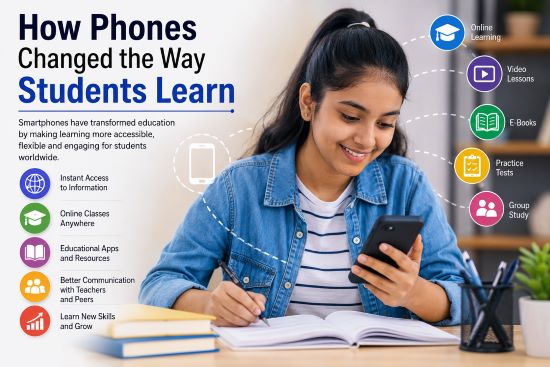
Smartphones have completely transformed the modern education system. From online classes and educational apps to instant access to information, phones are now one of the most powerful learning tools for students worldwide. In schools, colleges and universities, students increasingly rely on mobile devices for studying, research, communication and skill development. The impact of phones on education is massive, changing not only how students learn but also how teachers teach.
In today’s digital era, students no longer depend only on textbooks and classrooms. A smartphone connected to the internet can provide access to millions of educational resources within seconds. While phones offer many advantages for learning, they also come with challenges such as distractions, reduced focus and overdependence on technology.
This article explores how phones changed the way students learn, including both the positive and negative effects of mobile technology in education.
The Rise of Phone in Education
Over the past decade, smartphones have become an essential part of student life. Educational institutions now encourage digital learning through apps, online portals, video lectures and virtual classrooms. During the COVID-19 pandemic, phones played a critical role in helping students continue their education remotely.
Today, students use phones for:
- Attending online classes
- Searching educational content
- Reading eBooks and PDFs
- Watching tutorial videos
- Communicating with teachers
- Taking notes
- Completing assignments
- Learning new skills online
The convenience of mobile learning has made education more flexible and accessible than ever before.
Instant Access to Information
One of the biggest ways phones changed student learning is through instant access to information. In the past, students had to visit libraries or rely heavily on textbooks for research. Now, answers to academic questions are available within seconds through search engines, educational websites and learning platforms.
Students can quickly:
- Research school topics
- Find definitions and explanations
- Access academic journals
- Watch educational tutorials
- Learn difficult concepts visually
This easy access to knowledge improves independent learning and allows students to study at their own pace.
Online Learning Became Easier
Phones have made online learning simple and convenient. Educational platforms now offer mobile-friendly courses that students can access anytime and anywhere. Whether traveling, sitting at home or waiting between classes, students can continue learning through their phones.
Popular online learning methods include:
- Video lectures
- Live virtual classes
- Online quizzes
- Educational podcasts
- Interactive learning apps
Mobile learning has especially benefited students in remote areas where physical educational resources may be limited.
Educational Apps Improved Student Learning
The growth of educational apps has changed how students study and practice subjects. Apps provide interactive learning experiences that make education more engaging and less stressful.
Students now use apps for:
- Language learning
- Mathematics practice
- Coding lessons
- Science experiments
- Exam preparation
- Time management
- Note-taking
Many educational apps use techniques such as rewards, levels, and challenges to keep students motivated.
Better Communication Between Students and Teachers
Phones have improved communication in education. Students can easily contact teachers through message, emails or online classroom platforms. Teachers can share assignments, announcements, study materials and feedback instantly.
This has made education more connected and efficient. Group discussions and collaborative learning have also become easier through messaging groups and video calls.
Students no longer have to wait until the next classroom session to ask questions or seek academic help.
Video Learning Changed Education
Visual learning has become extremely popular. Platforms like YouTube and online educational websites provide thousands of free tutorials on almost every subject imaginable.
Video learning helps students:
- Understand difficult concepts visually
- Learn through demonstrations
- Pause and replay lessons
- Study at their own speed
For many students, watching a short educational video is more effective than reading long textbook chapters.
Digital Notes and Paperless Learning
Phones have reduced dependence on traditional notebooks and printed materials. Students now use digital note-taking apps to organize study materials, save PDFs, record lectures and store assignments.
Benefits of digital learning materials include:
- Easy access anywhere
- Better organization
- Quick searching within notes
- Reduced paper usage
- Easy sharing with classmates
This shift toward paperless education is also environmentally friendly.
New Skills
Modern students use smartphones not only for academic education but also for personal development and career skills. Through online platforms, students can learn:
- Graphic designing
- Video editing
- Programming
- Freelancing skills
- Digital marketing
- Content creation
- Communication skills
Many students today build careers and businesses directly from skills learned through mobile devices.
Increased Flexibility in Learning
Traditional learning follows fixed schedules, but phones allow students to learn whenever they want. This flexibility is one of the biggest changes brought by smartphones.
Students can:
- Study late at night
- Learn during travel
- Review lectures anytime
- Practice skills daily
- Manage their own learning pace
This is especially useful for students balancing education with jobs or family responsibilities.
The Negative Effects of Phones on Student Learning
Although phones offer many educational benefits, they also create several challenges for students.
Distractions and Reduced Focus
Social media, gaming apps and entertainment content can easily distract students from studies. Many students struggle to maintain concentration because notifications constantly interrupt learning sessions.
Short Attention Span
Constant scrolling and quick content consumption may reduce students’ ability to focus deeply on complex topics. Many educators believe smartphones contribute to shorter attention spans among students.
Dependence on Technology
Many students now depend heavily on phones for simple tasks like calculations, spelling, and information searches. This overreliance can weaken critical thinking and problem-solving abilities.
Sleep Problems and Mental Fatigue
Excessive screen time, especially before bedtime, can affect sleep quality. Poor sleep negatively impacts concentration, memory, and academic performance.
The Future of Mobile Learning
The role of phones in education will continue growing in the future. Technologies like artificial intelligence and virtual classrooms are making mobile learning even more advanced.
Future educational trends may include:
- AI-powered tutoring apps
- Virtual reality classrooms
- Personalized learning experiences
- Interactive educational simulations
- Smart study assistants
Balanced phone usage can help students maximize learning while avoiding distractions.