
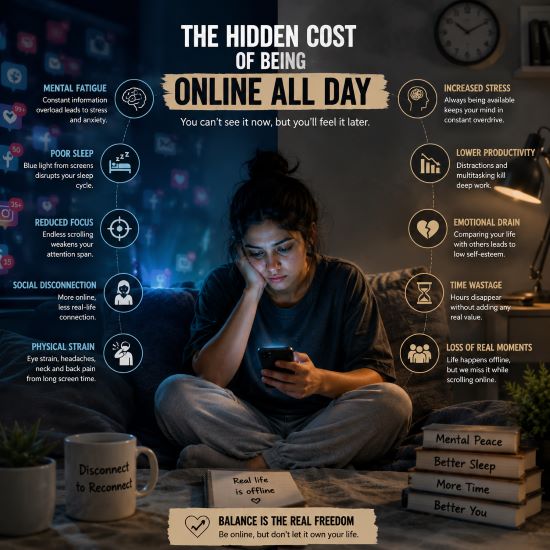
In today’s hyperconnected world, spending hours online has become completely normal. From scrolling social media and replying to emails to watching videos and attending virtual meetings, people are spending more time on screens than ever before. While the internet has made life easier, faster and more entertaining, there is also a growing conversation about the hidden cost of being online all day.
Many people don’t realize how excessive screen time affects mental health, productivity, sleep, relationships and even physical well-being. The impact is often gradual, making it difficult to notice until burnout, anxiety or digital fatigue becomes overwhelming.
The Internet Never Sleeps
One of the biggest problems with modern technology is that it keeps people constantly connected. Notifications, messages, updates and breaking news never stop.
Whether you use Instagram, TikTok or YouTube, there is always new content waiting for attention.
This creates a cycle where people feel pressured to:
- Stay updated
- Respond instantly
- Consume endless content
- Remain digitally active
Over time, this constant stimulation can become mentally exhausting.
Mental Health and Digital Fatigue
Spending too much time online can significantly impact mental health.
Many users experience:
- Anxiety
- Stress
- Overthinking
- Information overload
- Social comparison
- Emotional exhaustion
Social media especially contributes to unrealistic expectations. People constantly compare their lives with carefully curated online content.
Seeing endless success stories, luxury lifestyles and filtered perfection can create feelings of inadequacy and low self-esteem.
This phenomenon is now commonly referred to as digital fatigue or online burnout.
The Hidden Impact on Attention Span
Modern internet platforms are designed to capture attention quickly.
Short-form videos, instant notifications and rapid scrolling train the brain to seek constant stimulation. As a result, many people struggle with:
- Concentration
- Deep thinking
- Reading long content
- Staying focused on tasks
Apps are engineered to maximize engagement using dopamine driven feedback systems.
Over time, excessive internet use may reduce patience and make offline activities feel boring in comparison.
This is one reason why many people now find it difficult to disconnect from their phones even for a few minutes.
Sleep Problems Caused by Screen Time
One of the most overlooked hidden costs of being online all day is poor sleep quality.
Late night scrolling has become common across all age groups. Unfortunately, excessive screen exposure before bedtime can disrupt natural sleep cycles.
Blue light from screens affects melatonin production, making it harder for the brain to relax and prepare for sleep.
People who stay online late at night often experience:
- Difficulty falling asleep
- Interrupted sleep
- Morning fatigue
- Reduced productivity
- Increased stress levels
Poor sleep can eventually affect physical health, mood, memory and decision-making.
Social Media and Emotional Dependency
Many users unknowingly develop emotional dependency on social media.
Likes, comments and notifications create temporary feelings of validation and excitement. Over time, people may begin relying on online engagement for emotional satisfaction.
This can lead to:
- Addiction to notifications
- Fear of missing out (FOMO)
- Constant phone checking
- Mood swings linked to engagement
Social media platforms thrive on user attention, which is why they are designed to keep people scrolling for as long as possible.
The more time users spend online, the more profitable these platforms become.
Physical Health Problems From Constant Internet Use
The hidden cost of being online all day is not only mental.
Long hours on devices can contribute to:
- Eye strain
- Headaches
- Neck pain
- Poor posture
- Back pain
- Reduced physical activity
Many people underestimate how damaging prolonged sitting and continuous device use can become over several years.
Why It’s Hard to Disconnect
Modern platforms are intentionally addictive.
Algorithms study user behavior to keep people engaged as long as possible. Personalized recommendations make it difficult to stop scrolling because there is always another interesting video, article or post.
This creates a loop of continuous engagement.
People often say:
I’ll only scroll for five minutes.
But those minutes easily turn into hours.
The combination of entertainment, social validation and algorithmic recommendations makes digital addiction increasingly common worldwide.
Building Healthier Digital Habits
Being online is not bad. The internet provides education, opportunities, entertainment and global communication.
The key is balance.
Healthy online habits may include:
- Limiting screen time
- Turning off unnecessary notifications
- Taking social media breaks
- Avoiding screens before sleep
- Spending more time outdoors
- Prioritizing real-life relationships
- Practicing mindful internet use
Small changes can significantly improve mental clarity and overall well-being.
The Future of Digital Wellness
As society becomes increasingly digital, conversations around digital wellness are growing rapidly.
People are becoming more aware of:
- Social media addiction
- Mental health effects
- Attention economy manipulation
- Online burnout
Many experts believe future technology trends will focus more on healthier digital experiences rather than endless engagement.
The challenge moving forward is learning how to benefit from technology without allowing it to control daily life.