In today’s digital world, influencers have become some of the most powerful voices on the internet. From skincare and fitness to finance and technology, millions of people now rely on influencers for advice instead of certified experts. Whether it’s a beauty creator recommending products or a TikTok personality giving business tips, audiences often trust influencers faster than doctors, scientists, journalists or professionals.
But why does this happen?
The answer lies in psychology, social media algorithms, relatability and the way modern content is consumed online. Now, we’ll explore why people trust influencers more than experts, how social media changed public perception, and what this means for brands, businesses and society.
The Rise of Influencer Culture
Over the last decade, social media platforms like Instagram, TikTok, YouTube and Facebook transformed ordinary people into internet celebrities.
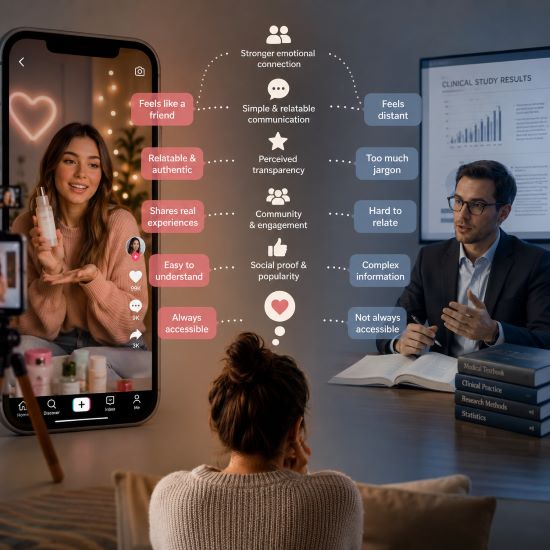
Unlike traditional experts who often appear formal and distant, influencers create content from bedrooms, cars, cafes and everyday settings. This makes them appear authentic and relatable.
People feel like they know influencers personally because they watch their daily lives, routines, struggles and emotions regularly. Experts, on the other hand, are often seen only in interviews, news articles or professional environments.
This emotional connection plays a huge role in building trust.
Relatability Beats Credentials
One major reason people trust influencers more than experts is relatability.
Experts usually communicate with technical language, statistics and research papers. Influencers speak casually, use humor, storytelling and personal experiences.
For example:
A dermatologist may explain skincare scientifically.
An influencer may simply say:
This cream cleared my acne in 7 days.
For many users, the second message feels easier to understand and emotionally convincing.
People naturally trust those who seem similar to them. This psychological effect is known as social similarity bias. When audiences see influencers with lifestyles, problems or appearances similar to theirs, they become more receptive to recommendations.
Social Media Algorithms Reward Personality
Modern algorithms are designed to maximize engagement.
Platforms prioritize:
- Emotional content
- Viral reactions
- Entertaining videos
- Personal storytelling
- Controversial opinions
Experts often produce careful and evidence-based content. Unfortunately, this type of content is usually slower and less entertaining.
Influencers understand how to create highly engaging posts that capture attention instantly. Their content is optimized for likes, shares, comments and watch time.
As a result:
Influencers become more visible
Experts become less discoverable
This visibility creates perceived authority.
Many people assume:
If millions follow this person, they must know what they’re talking about.
Parasocial Relationships Create Deep Trust
A parasocial relationship happens when audiences feel emotionally connected to someone they’ve never met.
Influencers share:
- Daily routines
- Family moments
- Mental health struggles
- Personal achievements
- Behind-the-scenes content
Over time, followers begin treating influencers like friends rather than strangers.
Experts rarely create this level of intimacy.
A scientist may publish groundbreaking research, but an influencer sharing morning coffee routines every day feels more emotionally familiar to viewers.
Humans are emotional decision-makers. Trust is often based more on emotional connection than objective expertise.
Influencers Feel More Honest
Many people distrust corporations, media outlets and institutions. In contrast, influencers often appear independent and transparent.
Even when influencers promote sponsored products, audiences may still feel:
They’re giving their real opinion.
This perception of authenticity is powerful.
Experts are sometimes viewed as:
- Too corporate
- Too academic
- Hard to understand
Meanwhile, influencers position themselves as “regular people” simply sharing experiences.
This creates the illusion of honesty, even when content may be sponsored or financially motivated.
Short Attention Spans Favor Influencers
Modern internet users consume content rapidly.
People prefer:
- 30-second videos
- Quick explanations
- Visual demonstrations
- Simple language
Experts often provide detailed explanations requiring time and concentration.
Influencers simplify information into digestible content.
Visual Proof Is Extremely Persuasive
Influencers rely heavily on visual transformation content.
Examples include:
- Weight loss before-and-after photos
- Skincare transformations
- Luxury lifestyle videos
- Fitness progress clips
- Product demonstrations
Visual storytelling creates strong emotional impact.
Experts usually rely on:
- Data
- Reports
- Studies
- Scientific evidence
Unfortunately, statistics rarely trigger emotional reactions the same way visual proof does.
People tend to believe what they can see immediately, even if the evidence is incomplete or misleading.