Technology evolves faster than ever, yet many outdated beliefs still shape how people use smartphones, computers, the internet, and artificial intelligence. In 2026, despite rapid advances in cybersecurity, cloud computing, AI tools, and smart devices, several tech myths continue to mislead users and businesses alike.
Believing these myths can hurt device performance, reduce security, waste money, and create unnecessary fear around modern technology. Whether you are a casual smartphone user, a business owner, a gamer, or a digital entrepreneur, understanding the truth behind these common technology myths is essential.
In this article, we will break down the biggest tech myths people still believe in 2026, explain why they are wrong, and reveal what actually works in today’s digital world.
1. More Megapixels Means Better Camera Quality
This is one of the oldest smartphone myths still surviving in 2026.
Many people assume a 200MP smartphone camera automatically beats a 50MP camera. In reality, megapixels are only one part of image quality.
Camera performance depends on:
- Sensor size
- Image processing software
- Lens quality
- AI enhancement
- Low-light optimization
- Dynamic range
The Truth
A premium flagship phone with a well-optimized 50MP sensor can easily outperform a cheaper phone with a 200MP sensor.
Modern smartphone photography relies heavily on computational photography and artificial intelligence. Brands now use AI image processing, HDR optimization, and machine learning to improve photos more than raw megapixel numbers. Inshort, Better camera quality comes from balanced hardware and software optimization, not just megapixels.
2. Macs Cannot Get Viruses
For years, Apple users believed macOS devices were immune to malware and hacking. That is completely false in 2026.
While Macs are generally secure, cybercriminals increasingly target macOS because Apple devices have become more popular worldwide.
Today’s Mac threats include:
- Phishing attacks
- Browser hijacking
- Spyware
- Ransomware
- Fake software installers
- Credential theft malware
Hackers no longer care about operating systems alone. They target users through social engineering, fake login pages, and malicious downloads.
The Truth
Macs are safer in some areas, but they are not virus-proof. Cybersecurity awareness still matters.
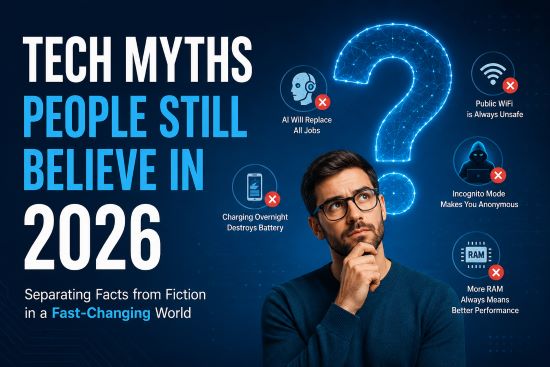
3. Charging Your Phone Overnight Damages the Battery
This myth has existed for over a decade.
Modern smartphones use advanced battery management systems that stop charging automatically when reaching full capacity.
Today’s devices include:
- Adaptive charging
- Temperature control
- Smart charging cycles
- AI battery health management
While heat can reduce battery lifespan over time, overnight charging itself is not dangerous for modern phones.
The Truth
Using poor-quality chargers or exposing devices to heat is more harmful than charging overnight.
4. Smart Devices Are Always Listening
Smart assistants like Alexa, Siri, and Google Assistant sparked fears that devices constantly spy on conversations.
These systems usually listen for specific wake words before they start processing any features. However, depending on your settings, some voice snippets might be temporarily stored to help improve the service
The Truth
Smart devices collect data, but they are not continuously recording every conversation secretly in the way many people imagine.
Users can still improve privacy by:
- Reviewing permissions
- Disabling microphones
- Clearing voice history
- Adjusting privacy settings
5. “Gaming Ruins Computers Faster”
Gaming itself does not destroy computers.
What actually damages systems includes:
- Excessive heat
- Poor cooling
- Dust buildup
- Low-quality power supplies
- Lack of maintenance
Modern gaming PCs are designed to handle intensive workloads for long periods.
The Truth
Proper cooling and maintenance matter more than gaming activity itself.
6. “You Must Fully Drain Batteries Before Charging”
This myth originated from old nickel-based batteries.
Modern lithium-ion batteries work differently.
Completely draining lithium batteries repeatedly can actually reduce long-term battery health.
Most experts recommend keeping batteries between:
- 20% and 80%
- Avoiding extreme heat
- Using quality chargers
The Truth
Partial charging is healthier for modern smartphone and laptop batteries.
Why Tech Myths Continue to Spread
Technology changes quickly, but misinformation spreads even faster. Several reasons explain why tech myths survive:
1. Outdated Information
Old advice from early smartphones or computers continues circulating online.
2. Social Media Misinformation
Short-form content often oversimplifies technical concepts.
3. Marketing Hype
Companies sometimes exaggerate features like megapixels, RAM, or AI capabilities.
4. Fear of New Technology
People naturally become skeptical about unfamiliar innovations like AI or 5G.
5. Lack of Digital Literacy
Many users do not fully understand how modern devices and software actually work.
How to Avoid Falling for Tech Myths
To stay informed in 2026:
- Follow trusted technology websites
- Verify information before sharing
- Learn basic cybersecurity practices
- Update devices regularly
- Understand how modern hardware works
- Stay informed about AI and digital privacy
Technology literacy is becoming as important as traditional literacy in the modern world.