Stress management is an important part of a healthy and balanced life. Everyone experiences stress from time to time because of work, studies, family responsibilities, money problems, or daily challenges. A small amount of stress can sometimes help us stay focused, but too much stress for a long time can affect our daily life and overall well-being.
The good news is that simple lifestyle changes can help manage stress. Healthy habits, enough sleep, regular physical activity, relaxation, and spending time with supportive people can make a positive difference.
What Is Stress?
Stress is the body’s natural response to challenging or demanding situations. When you feel stressed, your body may become more alert and your heart rate may increase.
Short-term stress is usually temporary. However, ongoing stress can make it harder to relax, sleep, concentrate, or enjoy everyday activities.
Common Signs of Stress
Stress can affect both the body and mind. Common signs include:
- Feeling worried or overwhelmed
- Difficulty sleeping
- Headaches or muscle tension
- Feeling tired
- Trouble concentrating
- Irritability or mood changes
- Changes in appetite
- Feeling restless
Simple Stress Management Tips
1. Get Enough Sleep
Good sleep gives your body and mind time to recover. Try to maintain a regular sleep schedule and create a relaxing bedtime routine.
2. Exercise Regularly
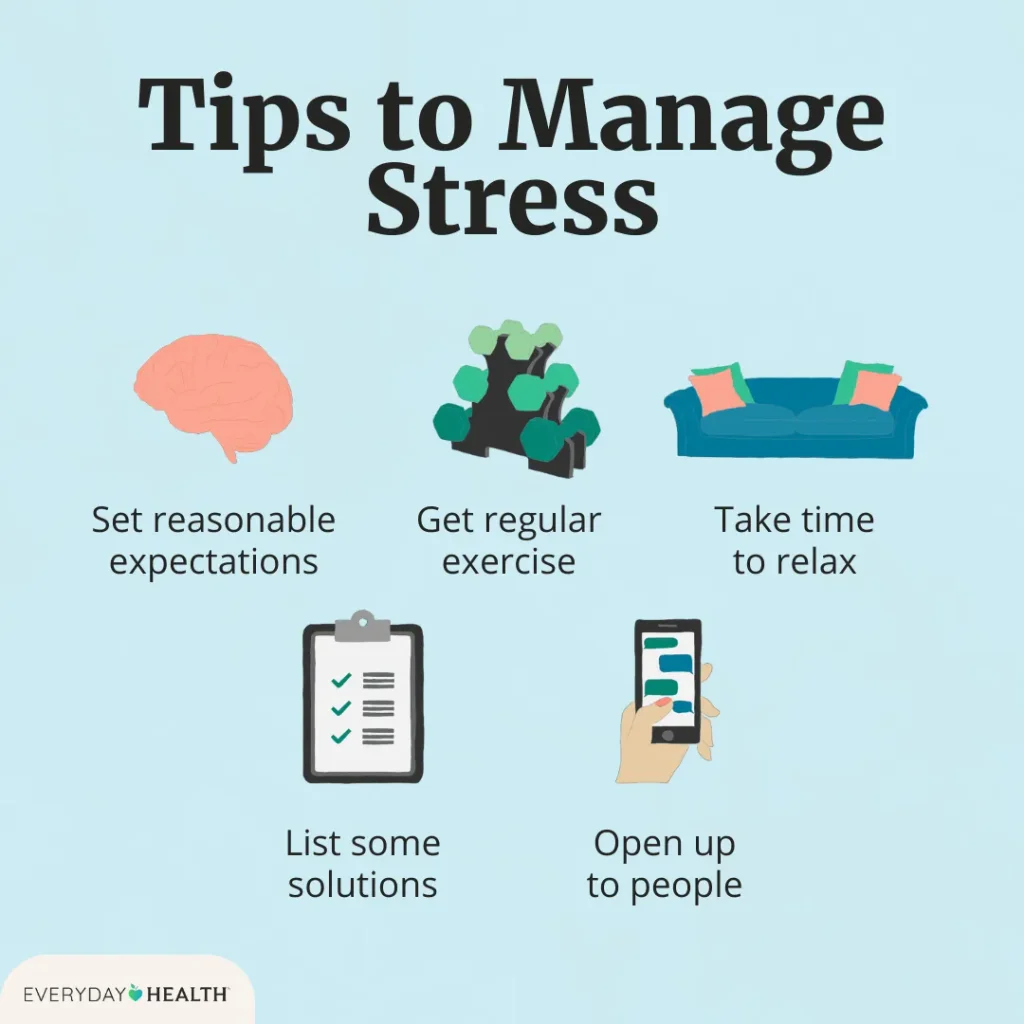
Walking, stretching, cycling, or other physical activities can help improve mood and reduce tension. Even a short daily walk can be a useful healthy habit.
3. Practice Deep Breathing
When you feel stressed, take slow, deep breaths. Breathe in gently, pause briefly, and breathe out slowly. Repeating this for a few minutes may help you feel calmer.
4. Take Short Breaks
Working or studying continuously can increase mental pressure. Take short breaks during the day to stretch, walk around, drink water, or relax.
5. Eat Healthy Foods
A balanced diet can support overall health. Include vegetables, fruits, whole grains, protein-rich foods, and enough water in your daily routine.
6. Manage Your Time
Making a simple daily list can help you organize responsibilities. Focus on important tasks first and avoid trying to complete everything at once.
7. Talk to Someone You Trust
Sharing your concerns with a trusted friend, family member, teacher, or professional can make difficult situations easier to handle.
8. Spend Time Doing Things You Enjoy
Reading, gardening, listening to music, walking, hobbies, or spending time with loved ones can provide healthy breaks from daily pressure.
9. Reduce Unnecessary Screen Time
Constant notifications, social media, and excessive news consumption can sometimes increase feelings of stress. Taking regular breaks from screens may help create a calmer routine.
10. Practice Relaxation
Meditation, mindfulness, gentle stretching, prayer, or other relaxing activities can help you slow down and focus on the present moment.
Why Stress Management Is Important
Good stress management can help you:
- Feel more relaxed
- Improve concentration
- Support better sleep
- Maintain healthy daily habits
- Handle challenges more effectively
- Improve overall quality of life
When Should You Seek Help?
If stress feels overwhelming, continues for a long time, or seriously affects your sleep, work, studies, relationships, or daily activities, consider speaking with a qualified healthcare or mental health professional.
If you feel that you may hurt yourself or someone else, seek urgent help from local emergency services or a trusted person immediately.
Final Thoughts
Stress management does not mean removing every stressful situation from life. Instead, it means learning healthy ways to respond to pressure and taking care of your physical and emotional well-being. Small changes, such as better sleep, regular exercise, relaxation, and talking to someone you trust, can become valuable parts of a healthier routine.
FAQs
1. What is stress management?
Stress management means using healthy strategies to reduce stress and cope with challenging situations.
2. What is the easiest way to manage stress?
Taking slow breaths, going for a short walk, taking a break, and talking to someone you trust are simple ways to start managing stress.
3. Can exercise reduce stress?
Regular physical activity can support mood and help the body manage tension associated with stress.
4. Does sleep help with stress?
Yes. Good-quality sleep supports physical and mental recovery and can make it easier to cope with daily challenges.
5. When should I get professional help for stress?
Consider professional support when stress is persistent, difficult to manage, or significantly affects your everyday life.