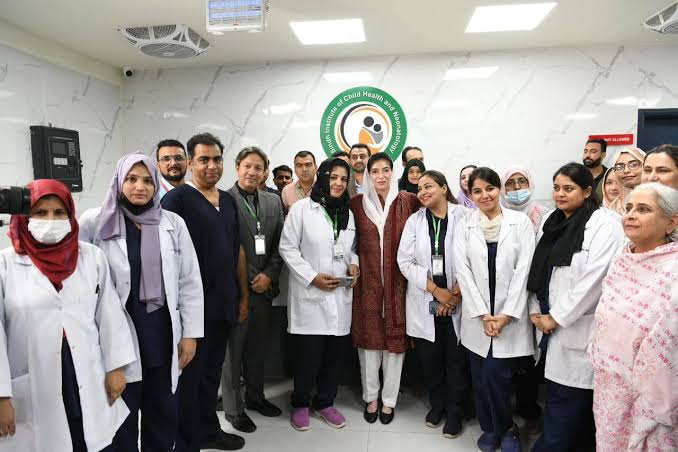
The Sindh Health Department, LUMS and Aga Khan University (AKU) have joined hands to bring artificial intelligence (AI) into public healthcare. The new three-year collaboration will focus on improving maternal, newborn and child healthcare across Sindh.
The partnership aims to bring AI-supported tools closer to frontline healthcare workers, particularly at primary healthcare facilities. The National AI Hub for Maternal, Newborn and Child Health will work with the provincial health system to support better and faster healthcare services.
How AI Will Help Healthcare in Sindh
Under the agreement, the partners plan to introduce several AI-based tools for healthcare providers. These include risk assessment models, clinical decision-support systems and voice-assisted tools.
These technologies could help healthcare workers identify health risks earlier and make better-informed decisions while caring for mothers and children.
Focus on Mothers and Newborns
Maternal and newborn healthcare is a major focus of the initiative. The project is expected to support healthcare workers in identifying possible risks during pregnancy and early stages of a child’s life.
The initiative also aims to help improve referrals and follow-up care, especially in areas where access to specialist healthcare can be limited.
What LUMS and AKU Will Do
LUMS will work as the technical partner, supporting AI model development, algorithm testing, speech technologies and technical safeguards.
Aga Khan University will provide clinical and research expertise and help evaluate AI tools in real healthcare settings. The Sindh Health Department will provide strategic oversight and help integrate the technology into public health facilities.
AI Will Support Doctors and Health Workers
The project is designed to support healthcare professionals rather than replace them. Officials said the collaboration will follow data privacy, ethical and regulatory safeguards, with clinical judgment remaining important in patient care.
Support From Gates Foundation
The National AI Hub is supported through a multi-year grant from the Gates Foundation. The wider hub was established by LUMS with a focus on using responsible AI to address maternal, newborn and child health challenges in Pakistan.
What This Means for Sindh
The partnership could help bring modern digital healthcare tools to public-sector facilities across Sindh. Its focus on primary healthcare means the technology is intended to reach frontline workers and communities that may have limited access to specialist services.
The project also shows how universities, government departments and healthcare institutions can work together to explore practical uses of AI in healthcare.
FAQs
What is the new AI healthcare partnership in Sindh?
The Sindh Health Department, LUMS and Aga Khan University have partnered to use artificial intelligence in maternal, newborn and child healthcare.
What is the main goal of the AI project?
The goal is to support healthcare workers and improve the quality, speed and accessibility of healthcare services.
Who will benefit from this initiative?
Pregnant women, newborns, children and frontline healthcare workers are among the key beneficiaries.
How can AI help healthcare workers?
AI tools can support risk assessment, clinical decision-making, referrals and follow-up care.
Will AI replace doctors?
No. The project is designed to support healthcare professionals, while clinical judgment remains important in patient care.
Where will the AI tools be used?
The initiative is intended to support Sindh’s public healthcare system, particularly frontline and primary healthcare facilities.
Is the project focused only on technology?
No. The partnership combines AI technology with medical expertise, research, healthcare delivery and responsible data practices.