Epoxy flooring is a strong and attractive flooring solution used in homes, offices, garages, factories, hospitals, shops, and warehouses. It creates a smooth, durable surface that can handle heavy traffic, stains, moisture, and daily wear.
In this guide, we will explain what epoxy flooring is, how it works, its benefits, types, uses, pros, cons, and maintenance tips in simple words.
Why Is Epoxy Flooring Used in These Places?
Epoxy flooring is popular in homes, garages, offices, warehouses, factories, and commercial areas because it is strong, durable, and easy to maintain. Its smooth surface also gives floors a clean and attractive appearance.
Main Reasons to Use Epoxy Flooring
- Durable: It can handle heavy foot traffic and vehicles.
- Easy to Clean: The smooth surface makes sweeping and mopping simple.
- Water Resistant: It helps protect concrete floors from moisture.
- Stain Resistant: It can resist many oil, grease, and chemical stains.
- Low Maintenance: It does not require frequent repairs or polishing.
- Attractive Look: Available in different colors, finishes, and designs.
- Long Lasting: Properly installed epoxy can provide years of reliable use.
- Safety Options: Anti-slip finishes can be added for better grip.
- Protects Concrete: It creates a protective layer over the concrete surface.
Overall, epoxy flooring is used where strength, cleanliness, protection, and a professional appearance are important.
How Does Epoxy Flooring Work?
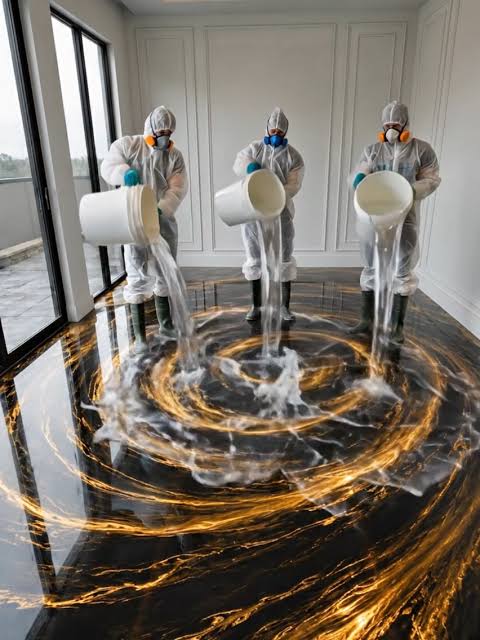
Epoxy flooring works by applying a mixture of epoxy resin and hardener over a properly prepared concrete floor. When these materials are mixed, they create a chemical reaction that turns the liquid coating into a hard, strong, and durable surface.
- Floor Preparation
The concrete floor is cleaned to remove dust, dirt, oil, grease, and old coatings. Cracks and damaged areas are repaired before applying epoxy.
- Primer Application
A primer may be applied to help the epoxy bond firmly with the concrete surface.
- Mixing Epoxy
The epoxy resin and hardener are mixed in the correct ratio. This starts the curing process.
- Applying the Epoxy
The mixture is spread evenly over the floor. Depending on the project, several coats may be applied.
- Adding Color or Design
Different colors, decorative flakes, metallic effects, or anti-slip materials can be added to create the desired finish.
- Curing
The floor is left to cure and harden. The required curing time depends on the epoxy product and environmental conditions.
- Final Protective Coat
A topcoat may be added for extra protection, durability, chemical resistance, or slip resistance.
In simple words, epoxy flooring creates a strong protective layer over concrete. It helps make the floor durable, smooth, attractive, and easier to clean.
Benefits of Epoxy Flooring
Epoxy flooring is popular because it provides a strong, durable, and attractive surface. Some of its main benefits include:
- Highly Durable: Epoxy can handle heavy foot traffic, vehicles, and regular use.
- Easy to Clean: Its smooth surface makes cleaning quick and simple.
- Stain Resistant: It can resist many common oil, grease, and chemical stains.
- Water Resistant: A properly installed epoxy system helps protect the concrete from moisture.
- Attractive Look: It is available in many colors, patterns, and finishes.
- Seamless Surface: Epoxy creates a smooth surface without traditional tile joints.
- Low Maintenance: It generally requires less maintenance than many other flooring options.
- Long-Lasting: Quality epoxy flooring can provide years of service when properly installed and maintained.
- Improved Safety: Anti-slip additives can be used to provide better grip.
- Cost-Effective: Its durability and low maintenance can make it a practical long-term flooring choice.
Types of Epoxy Flooring
There are several types of epoxy flooring, and each type is designed for different needs. Here are the most common options:
- Self-Leveling Epoxy
Self-leveling epoxy creates a smooth and even surface. It is commonly used in homes, offices, shops, and showrooms.
- Epoxy Flake Flooring
Small decorative flakes are added to the epoxy coating. This type provides an attractive textured appearance and is popular for garages and commercial areas.
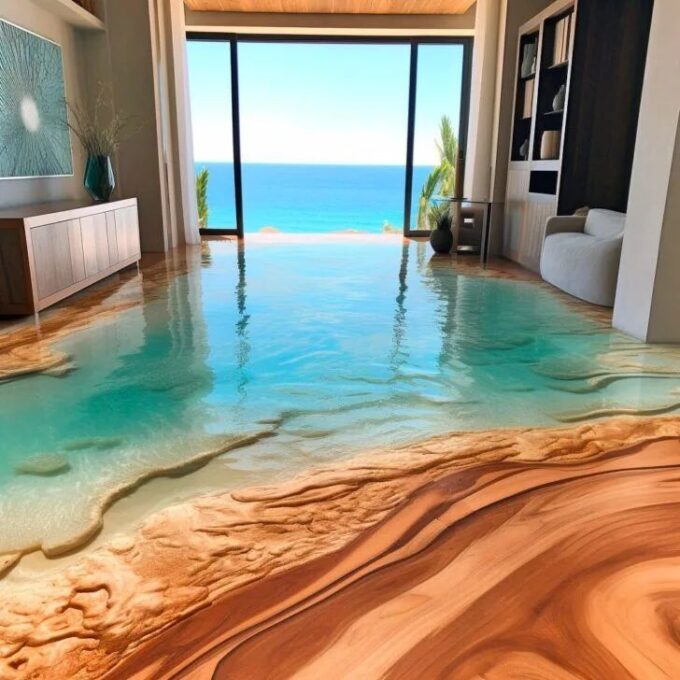
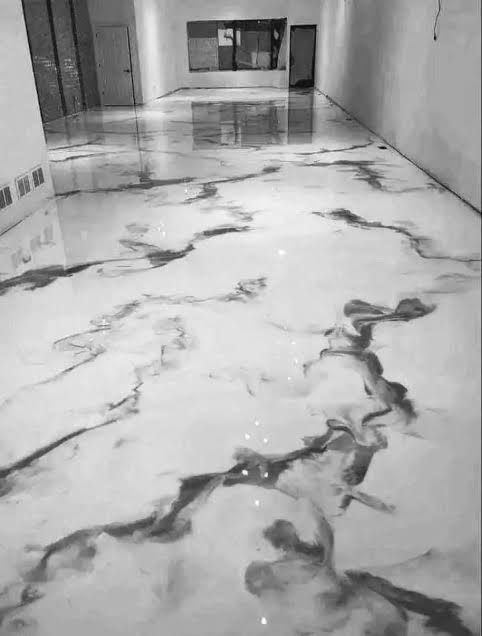
- Metallic Epoxy Flooring
Metallic pigments create a unique, glossy, and three-dimensional appearance. It is mainly used where decorative flooring is required.
- Quartz-Filled Epoxy
This flooring combines epoxy with colored quartz particles. It provides good durability and can offer improved slip resistance, making it suitable for commercial and industrial areas.
- Anti-Slip Epoxy Flooring
Special materials are added to the surface to provide better grip. It is useful in workshops, kitchens, industrial areas, and other places where floors may become wet.
- Epoxy Mortar Flooring
Epoxy mortar flooring is a heavy-duty system designed for demanding environments. It can be used in factories, warehouses, workshops, and areas exposed to heavy loads.
- Epoxy Terrazzo Flooring
Epoxy terrazzo combines epoxy resin with decorative aggregates to create a durable and attractive floor. It is often used in offices, schools, hospitals, and commercial buildings.
Where Is Epoxy Flooring Used?
Epoxy flooring is used in many homes, businesses, and industrial areas because it provides a strong, smooth, and easy-to-clean surface.
Common Places Where Epoxy Flooring Is Used
- Garages: Helps protect concrete from vehicle traffic, oil, grease, and dirt.
- Homes: Suitable for garages, basements, kitchens, and utility areas.
- Factories: Provides a durable surface for heavy industrial use.
- Warehouses: Suitable for areas with forklifts, equipment, and heavy foot traffic.
- Workshops: Helps protect floors from grease, oil, stains, and daily wear.
- Offices: Decorative epoxy can create a clean and modern appearance.
- Shops: Available in different colors and finishes for attractive retail floors.
- Showrooms: Glossy and decorative finishes can improve the overall appearance.
- Hospitals and Clinics: Seamless surfaces can be easier to clean and maintain.
- Restaurants and Kitchens: Specialized epoxy systems can provide durable and cleanable surfaces.
- Schools: Useful for corridors, halls, and other high-traffic areas.
- Commercial Buildings: Can be used in many areas where durability and easy maintenance are important.
Why Is Epoxy Flooring Used in These Places?
Epoxy flooring is popular because it offers durability, easy maintenance, stain resistance, and a smooth appearance. The right epoxy system should be selected according to the traffic, chemicals, moisture, temperature, and safety requirements of the area.
Epoxy Flooring for Garages
Epoxy is a popular choice for garage floors because it can provide a durable, easy-to-clean surface. It can also improve the overall appearance of a garage and help protect concrete from common stains.
Epoxy Flooring for Industrial Areas
Factories and warehouses often need flooring that can handle heavy traffic and equipment. Depending on the selected system, industrial epoxy floors can provide durability, chemical resistance, and easier maintenance.
Pros
Epoxy flooring has many advantages, making it a popular choice for homes, garages, offices, shops, and industrial areas.
- Highly Durable: Handles heavy traffic and regular use.
- Easy to Clean: Smooth surface makes cleaning simple.
- Low Maintenance: Requires little regular maintenance.
- Attractive Appearance: Available in many colors, patterns, and finishes.
- Stain Resistant: Helps resist oil, grease, dirt, and many common stains.
- Seamless Surface: Provides a smooth floor without traditional tile joints.
- Long-Lasting: A properly installed system can last for many years.
- Good Chemical Resistance: Suitable epoxy systems can resist many chemicals.
- Customizable: Decorative flakes, colors, and textures can be added.
- Anti-Slip Options: Special additives can improve grip where needed.
- Cost-Effective: Its durability and low maintenance can make it a practical long-term flooring option.
Cons
Although epoxy flooring has many benefits, it also has some disadvantages that should be considered before installation.
- Requires Proper Preparation: The concrete must be properly cleaned and prepared.
- Professional Installation: Good results often require experienced installers.
- Installation Time: The floor needs time to cure before it can be used normally.
- Moisture Problems: Excess moisture in the concrete can cause adhesion problems.
- Can Be Slippery: A smooth epoxy floor may become slippery when wet unless an anti-slip finish is used.
- Can Crack or Peel: Poor installation, surface movement, or unsuitable conditions can cause cracking or peeling.
- Repair Can Be Difficult: Damaged areas may be noticeable after repair, especially on decorative finishes.
- Strong Odor During Installation: Some epoxy products can produce noticeable odors while being applied and cured.
- Surface Can Fade: Certain epoxy coatings may lose color or gloss when exposed to strong sunlight for long periods.
- Temperature Sensitive: Application and curing can be affected by unsuitable temperature or humidity.
Overall, epoxy flooring can be an excellent choice when the correct product is used and the floor is properly prepared and installed.
How to Maintain Epoxy Flooring?
Proper maintenance helps keep your epoxy flooring clean, shiny, and durable for many years. Follow these simple tips:
- Sweep regularly to remove dust, dirt, and sand.
- Clean spills quickly to prevent stains.
- Mop with mild soap and water for regular cleaning.
- Avoid harsh chemicals that may damage the coating.
- Do not drag heavy furniture or equipment across the floor.
- Use protective pads under heavy furniture and machines.
- Remove oil and grease from garage floors as soon as possible.
- Use a soft mop or microfiber cloth to avoid scratches.
- Repair cracks or damaged areas promptly.
- Avoid abrasive cleaning tools such as steel wool.
Simple Maintenance Routine
Daily: Remove dirt and spills.
Weekly: Sweep and mop the floor.
Monthly: Check for scratches, cracks, or peeling.
With regular cleaning and proper care, your epoxy floor can maintain its appearance and performance for years.
FAQs
1. What is epoxy flooring?
Epoxy flooring is a strong floor coating made from epoxy resin and hardener. It creates a smooth, durable, and easy-to-clean surface.
2. How long does epoxy flooring last?
With proper installation and maintenance, epoxy flooring can last around 5–10 years or more, depending on usage and conditions.
3. Is epoxy flooring waterproof?
Yes. Epoxy creates a water-resistant surface, making it suitable for garages, kitchens, warehouses, and other areas exposed to moisture.
4. Is epoxy flooring easy to clean?
Yes. Its smooth, seamless surface makes cleaning easy. Regular sweeping and mopping can help keep it looking good.
5. Can epoxy flooring be used outdoors?
Some epoxy systems can be used outdoors, but standard epoxy may not be ideal for direct sunlight because UV exposure can cause discoloration.
6. Is epoxy flooring slippery?
Epoxy can become slippery when wet. Anti-slip additives or textured finishes can be added to improve safety.
7. How long does epoxy flooring take to install?
Installation usually takes a few days, depending on the floor condition, preparation, number of coats, and drying time.
8. Can epoxy be applied over old concrete?
Yes, epoxy can be applied over concrete if the surface is properly cleaned, repaired, dry, and prepared.
9. Is epoxy flooring expensive?
The cost depends on the floor size, epoxy type, surface preparation, design, and labor. It can be more expensive initially than basic floor paint but offers greater durability.
10. How do you maintain epoxy flooring?
Sweep regularly, clean spills quickly, use mild cleaning products, and avoid harsh chemicals or abrasive tools.
11. Can epoxy flooring resist chemicals?
Yes. Many epoxy coatings offer good resistance to oils, chemicals, and cleaning products, making them popular in garages and industrial areas.
12. Is epoxy flooring good for garages?
Yes. Epoxy is an excellent choice for garages because it is durable, stain-resistant, easy to clean, and can handle vehicle traffic.