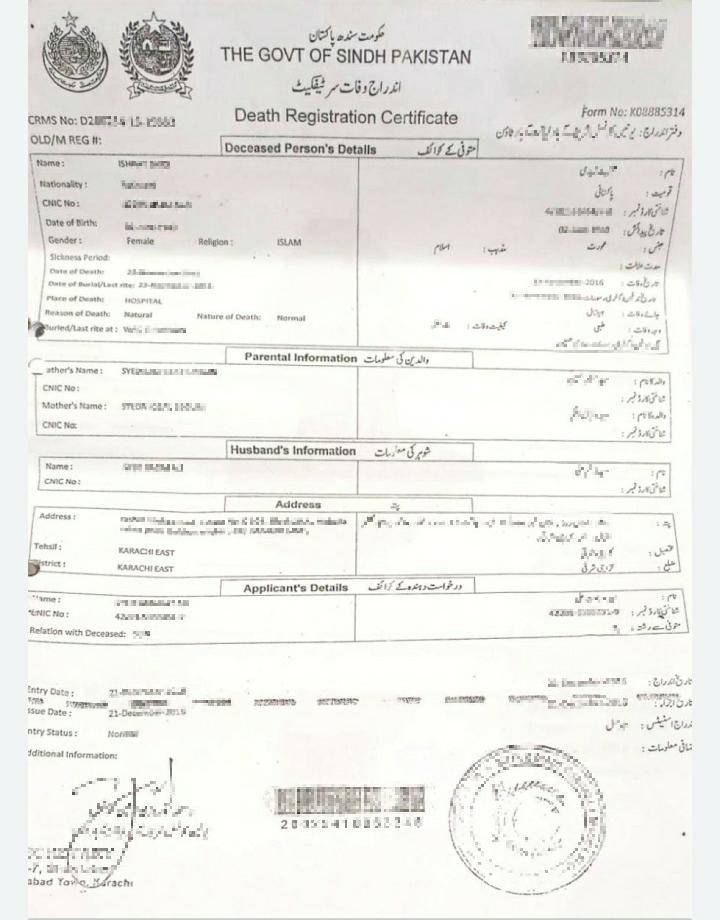
A death certificate is an important official document that records the death of a person. In Pakistan, a death certificate is generally issued through the relevant Union Council, Municipal Committee, Cantonment Board, or Use relevant and trustworthy websites
authorized local government authority, depending on the area.
This document is commonly required for inheritance matters, bank accounts, insurance claims, property transfers, pension cases, and updating government records.
Required Documents in Pakistan
To apply for a Death Certificate in Pakistan, you may need the following documents:
- Deceased Person’s CNIC – Original or copy, if available.
- Applicant’s CNIC – Valid CNIC of the family member or authorized applicant.
- Hospital Death Certificate – If the death occurred at a hospital.
- Medical Death Certificate – Proof of the cause of death, where required.
- Burial/Graveyard Record – May be required by the concerned authority.
- Proof of Relationship – Such as a family registration record, where applicable.
- Death Registration Form – Properly completed application form.
- Additional Supporting Documents – Any documents requested by the relevant Union Council or registration authority.
Important Note
The exact Death Certificate required documents may differ depending on the city, Union Council, Municipal Committee, Cantonment Board, or other Learn more about the NADRA Death Certificate Procedure and the documents required for registration.. Always confirm the latest requirements before submitting your application.
How to Apply for a Certificate in Pakistan
You can generally apply for a death Certificate in Pakistan through the relevant Union Council, Municipal Committee, Cantonment Board, or other authorized local registration authority.
Step-by-Step Procedure
- Obtain the Medical Death Certificate
If the person died in a hospital, obtain the death certificate or medical document issued by the hospital or doctor. - Collect Required Documents
Prepare the deceased person’s CNIC, applicant’s CNIC, medical death certificate, and other supporting documents required by the local authority. - Visit the Relevant Registration Office
Go to the Union Council, Municipal Committee, Cantonment Board, or other authorized office responsible for death registration in your area. - Complete the Application Form
Fill out the death registration form with accurate information about the deceased, including name, CNIC number, date and place of death, and other required details. - Submit the Documents
Submit the completed application form along with the required supporting documents. - Complete Verification
The registration authority may verify the information and documents before registering the death. - Pay the Applicable Fee
If a fee is applicable, pay it according to the current schedule of the concerned authority. - Receive the Certificate
After successful registration and verification, the official certificate is issued according to the authority’s procedure.
Important Points
- Register the death as soon as possible.
- Make sure all names, CNIC numbers, and dates are entered correctly.
- Keep the original certificate safe and make copies for official use.
- NADRA records may also need to be updated after official death registration.
- For delayed registration, additional documents or verification may be required.
- Requirements, fees, and processing times can vary by local authority.
Certificate From NADRA
is important to understand that death registration and the issuance of a local death certificate are generally handled by the relevant local government authority. NADRA maintains identity records and may update the deceased person’s status in its database based on the required official documentation.
Applicants should check with the relevant Union Council or local registration authority for the latest procedure and requirements.
Why Is a Certificate Important?
- Legal Proof of Death – Officially confirms a person’s death.
- Inheritance Matters – Often required for inheritance and succession processes.
- Bank Account Claims – Helps families deal with the deceased person’s bank accounts and assets.
- Insurance Claims – Required for processing life insurance and other eligible claims.
- Property Transfer – May be needed for transferring or settling property ownership.
- Pension Benefits – Can be required to process pension or family-benefit claims.
- NADRA Record Update – Helps update the deceased person’s official identity record.
- Court and Legal Matters – May be required in various legal proceedings.
- Government Benefits – Can support applications for eligible family or government benefits.
- Official Record Keeping – Provides an official record of the date and place of death.
Important Points About Certificate in Pakistan
- Register the death as soon as possible after the person’s death.
- Keep the deceased person’s CNIC and applicant’s CNIC available.
- Obtain a hospital or medical certificate when applicable.
- Apply through the relevant Union Council, Municipal Committee, Cantonment Board, or authorized authority.
- Check all information carefully before submitting the application.
- Keep the original death certificate in a safe place.
- Make photocopies for inheritance, banking, insurance, and other official matters.
- Delayed death registration may require additional documents or verification.
- Requirements and fees can vary depending on the local authority.
- Update the deceased person’s NADRA record after completing the official death registration process.
Frequently Asked Questions
- Where can I apply for a certificate in Pakistan?
You can generally apply through the relevant Union Council, Municipal Committee, Cantonment Board, or authorized registration authority. - What documents are required for a certificate?
Commonly required documents include the deceased person’s CNIC, applicant’s CNIC, medical or hospital certificate, and the required application form. - Can a family member apply for the certificate?
Yes, a close family member or authorized person can generally apply, subject to local requirements. - Is a hospital death certificate enough?
A hospital certificate provides medical evidence of death, while the official death registration certificate is issued by the relevant government authority. - Is a ertificate required for inheritance?
Yes, it is commonly required for inheritance and succession-related procedures. - Can I register a death after a long delay?
Delayed registration may be possible, but additional documents, verification, or approval may be required. - Does NADRA issue the local death certificate?
Death registration is generally handled by the relevant local government authority. NADRA records may be updated based on official documentation. - How long does it take to get a death certificate?
Processing time varies depending on the registration authority and whether additional verification is required. - Is there a fee for a certificate?
Fees, if applicable, can vary according to the relevant local authority and type of registration. - Why is a certificate important?
It serves as official proof of death and may be needed for inheritance, bank accounts, insurance, pension, property, and other legal matters.
Conclusion
Obtaining a death certificate in Pakistan is an important legal and administrative process. Applicants should prepare the required documents, visit the relevant local registration authority, submit the application, and complete the verification process. Since requirements can vary by area, it is recommended to confirm the latest requirements with the concerned Union Council or local authority before applying.