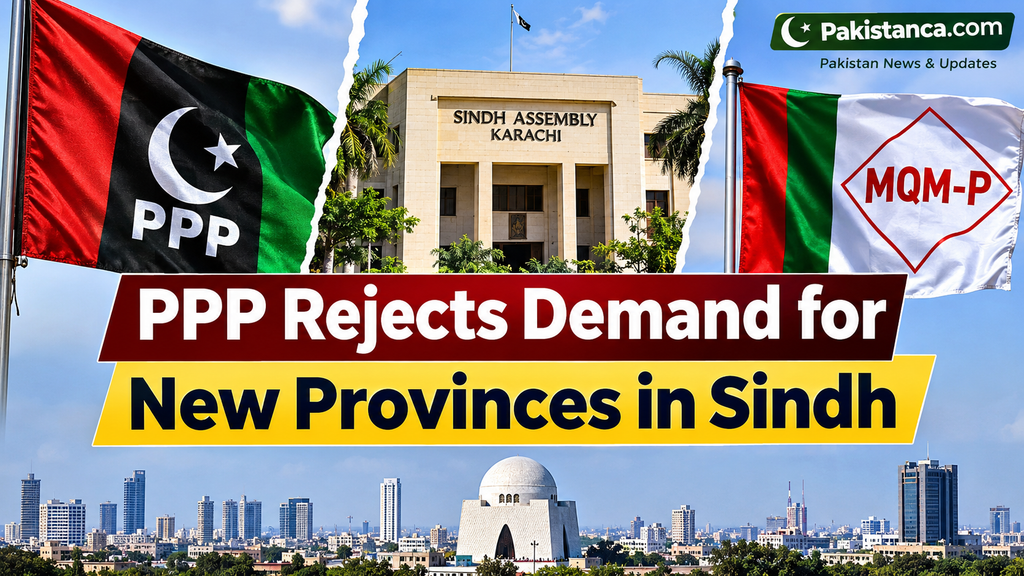
The PPP rejects MQM-P’s demand for new provinces in Sindh, making the issue of creating new provinces in Sindh a major topic of political discussion on 16 November 2026. The Pakistan Peoples Party (PPP) has opposed the proposal, while the Muttahida Qaumi Movement-Pakistan (MQM-P) has called for new provinces. This disagreement highlights different political views about Sindh’s future and administrative structure.
Why Has PPP Rejected New Provinces in Sindh?
PPP Rejects New Provinces in Sindh On November 16, 2026, Nasir Hussain Shah responded to recent statements by MQM-P leaders. He said that the demand for new provinces reflected political frustration.
Shah argued that political leaders should focus on public issues instead of discussing the division of Sindh. He also stressed the importance of protecting the province’s history, culture and identity.
According to his statement, people need better public facilities, employment opportunities, peace and development.
What Is MQM-P Demanding?
MQM-P has continued to call for the creation of new provinces or administrative units. Senior party leader and Federal Health Minister Mustafa Kamal recently repeated this demand during a workers’ gathering in Karachi.
He argued that Pakistan needs a better administrative system to address the needs of its growing population.
Mustafa Kamal also said that December 2026 would be an important month for the new provinces debate. He discussed the possibility of holding a referendum on the issue.
PPP and MQM-P Have Different Positions
The two political parties have different views about the future administrative structure of Sindh.
The PPP opposes dividing the province and supports protecting its existing geographical boundaries. On the other hand, MQM-P argues that smaller administrative units could improve governance and bring public services closer to residents.
These different positions have kept the issue in the centre of Sindh’s political debate.
What Does This Debate Mean for Karachi?
Karachi is one of Pakistan’s largest cities and an important centre of business and economic activity. Its population growth has increased the demand for better transport, water supply, healthcare, education and local government services.
MQM-P says administrative changes could help address these challenges. The PPP, however, maintains that Sindh’s unity should remain protected.
The debate has also raised questions about local government powers, public resources and the delivery of basic services.
What Happens Next?
The disagreement between the PPP and MQM-P is expected to remain an important political issue in Sindh.
Any proposal to change provincial boundaries must follow the constitutional process. Political consensus and the required parliamentary and provincial approval would be essential.
For now, the PPP has maintained its opposition to new provinces in Sindh, while MQM-P continues to support its demand for administrative changes.
Pakistanca.com will continue to share important updates about Karachi, Sindh politics and public affairs.
FAQs.
1. Why has PPP rejected new provinces in Sindh?
The PPP says Sindh’s geographical unity, history and cultural identity should be protected.
2. Who rejected the MQM-P demand?
Sindh Local Government Minister Syed Nasir Hussain Shah rejected the demand on November 16, 2026.
3. What does MQM-P want?
MQM-P is demanding new provinces or administrative units, arguing that administrative changes could improve governance.
4. What did Mustafa Kamal say about December 2026?
He described December as an important month for the new provinces debate and discussed holding a referendum.
5. Can new provinces be created in Pakistan?
Yes. However, creating a new province requires constitutional amendments and the approvals specified under Article 239 of Pakistan’s Constitution.