
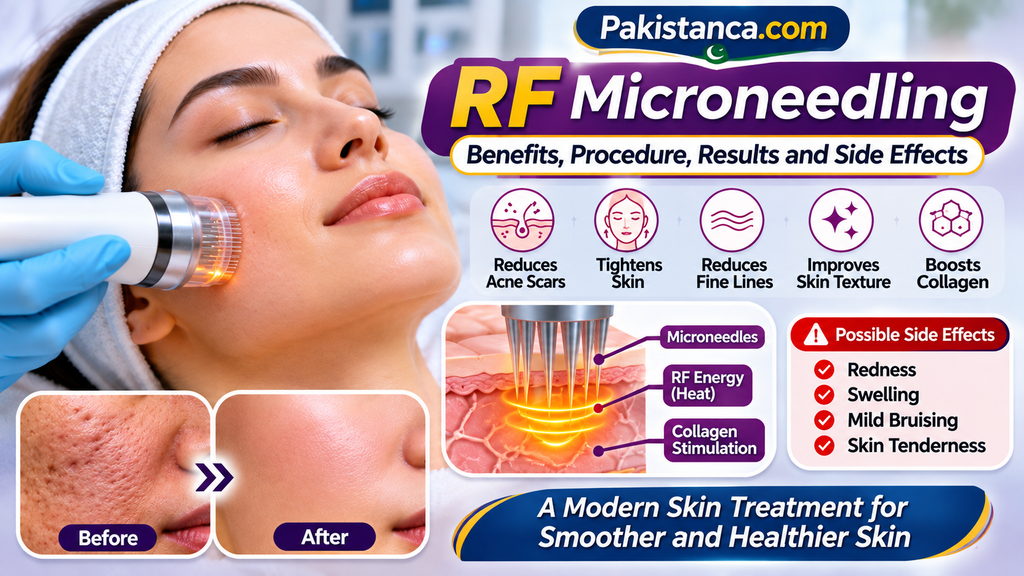
RF microneedling is a modern skin treatment that combines tiny needles with radiofrequency energy. Many people explore this procedure to improve skin texture, acne scars and signs of ageing.
RF microneedling has gained attention in aesthetic dermatology because it targets deeper layers of the skin. However, patients should understand its benefits and risks before choosing this procedure.
What Is RF Microneedling?
RF microneedling stands for Radiofrequency Microneedling. It combines traditional microneedling with controlled radiofrequency energy.
The device uses tiny needles to reach specific skin depths. It then delivers heat through the needles. This process aims to stimulate collagen production and improve skin texture.
Dermatologists may recommend this treatment for selected skin concerns after examining the patient’s skin.
How Does It Work?
It works through two main processes.
- Tiny needles create controlled micro-injuries in the skin.
- Radiofrequency energy delivers heat into targeted skin layers.
These processes encourage the body’s natural healing response. They may also stimulate collagen and elastin production.
Over time, some patients notice improvements in skin firmness and texture. Results depend on the device, treatment settings and individual skin condition.
Main Benefits
microneedling may help improve several skin concerns. Here are some potential benefits.
1. Improves Acne Scars
microneedling can help improve the appearance of certain acne scars. The treatment targets deeper skin layers and supports collagen production.
2. Supports Skin Tightening
The radiofrequency energy heats targeted tissue. This process may improve mild skin laxity and create a firmer appearance.
3. Reduces Fine Lines
Some patients choose RF microneedling to improve fine lines and wrinkles. The treatment may support smoother-looking skin over time.
4. Improves Skin Texture
The procedure may help reduce uneven skin texture. Some patients also seek it to improve the appearance of enlarged pores.
5. Supports Collagen Production
Collagen helps maintain skin structure and firmness. RF microneedling aims to stimulate the body’s natural collagen response.
Which Skin Problems Can Microneedling Target?
Dermatologists may consider RF microneedling for:
- Certain acne scars
- Mild skin laxity
- Fine lines and wrinkles
- Uneven skin texture
- Selected signs of skin ageing
The treatment does not guarantee the same results for everyone. A dermatologist should assess each skin concern before recommending it.
What Happens During Treatment?
A typical treatment involves several steps.
Step 1: Skin Examination
The dermatologist examines your skin and discusses your treatment goals.
Step 2: Skin Preparation
The specialist cleans your skin. They may also apply numbing cream to reduce discomfort.
Step 3: RF Microneedling Treatment
The dermatologist moves the device across selected areas. Tiny needles deliver radiofrequency energy into the targeted skin layers.
Step 4: Aftercare
The specialist provides instructions to protect your skin during recovery. Follow these instructions carefully.
Possible Side Effects
RF microneedling is a medical procedure, so it carries risks.
Common temporary reactions may include:
- Redness
- Swelling
- Skin tenderness
- Bruising
- Dryness
- Mild discomfort
Important safety warning: For reliable information about RF microneedling safety and potential risks, visit the US Food and Drug Administration (FDA).
Who Should Avoid Microneedling?
Not everyone qualifies for this procedure. Your dermatologist should review your medical history and skin condition before treatment.
People with active skin infections, certain skin conditions, healing problems or other medical concerns may need to avoid or delay the procedure.
Discuss your medications, allergies and previous cosmetic treatments with your doctor.
RF Microneedling vs Traditional Microneedling
Both procedures use tiny needles, but they work differently.
| Feature | RF Microneedling | Traditional Microneedling |
|---|---|---|
| Technology | Needles and radiofrequency | Needles only |
| Energy | Heat energy | Mechanical stimulation |
| Main target | Skin texture and firmness | Skin texture and scars |
| Collagen support | Yes | Yes |
| Procedure | Medical device treatment | Medical device treatment |
Your dermatologist can help you select the right option for your skin.
Is Microneedling Worth Considering in 2026?
RF microneedling remains an option in aesthetic dermatology for selected skin concerns. It may help improve acne scars, skin texture and mild skin laxity.
However, the procedure requires careful assessment and professional medical expertise. Recent FDA safety warnings also make it important to discuss serious risks before treatment.
Choose an experienced dermatologist and ask about the device, treatment settings and possible complications.
FAQs.
1. What is microneedling used for?
Dermatologists may use RF microneedling to improve certain acne scars, fine lines, uneven skin texture and mild skin laxity.
2. Does microneedling improve acne scars?
Yes, it may improve the appearance of certain acne scars by stimulating collagen production. Results vary between patients.
3. Is microneedling painful?
Some people experience discomfort during treatment. A dermatologist may apply numbing cream to reduce pain.
4. How long does recovery take?
Recovery varies depending on the device and treatment settings. Redness and swelling may occur after the procedure.
5. Can microneedling damage skin?
Yes. Incorrect settings or improper treatment can cause serious complications, including burns, scarring and unwanted fat loss.
6. Is microneedling safe for all skin types?
No procedure is suitable for everyone. A qualified dermatologist should assess your skin and medical history first.
7. Can I perform microneedling at home?
No. RF microneedling requires professional medical equipment and trained healthcare providers. Do not use these devices at home.
Note.
Visit Pakistanca.com for more skincare, beauty and health updates.