
NCCIA Warns WhatsApp Business Users About Rising Account Hacking
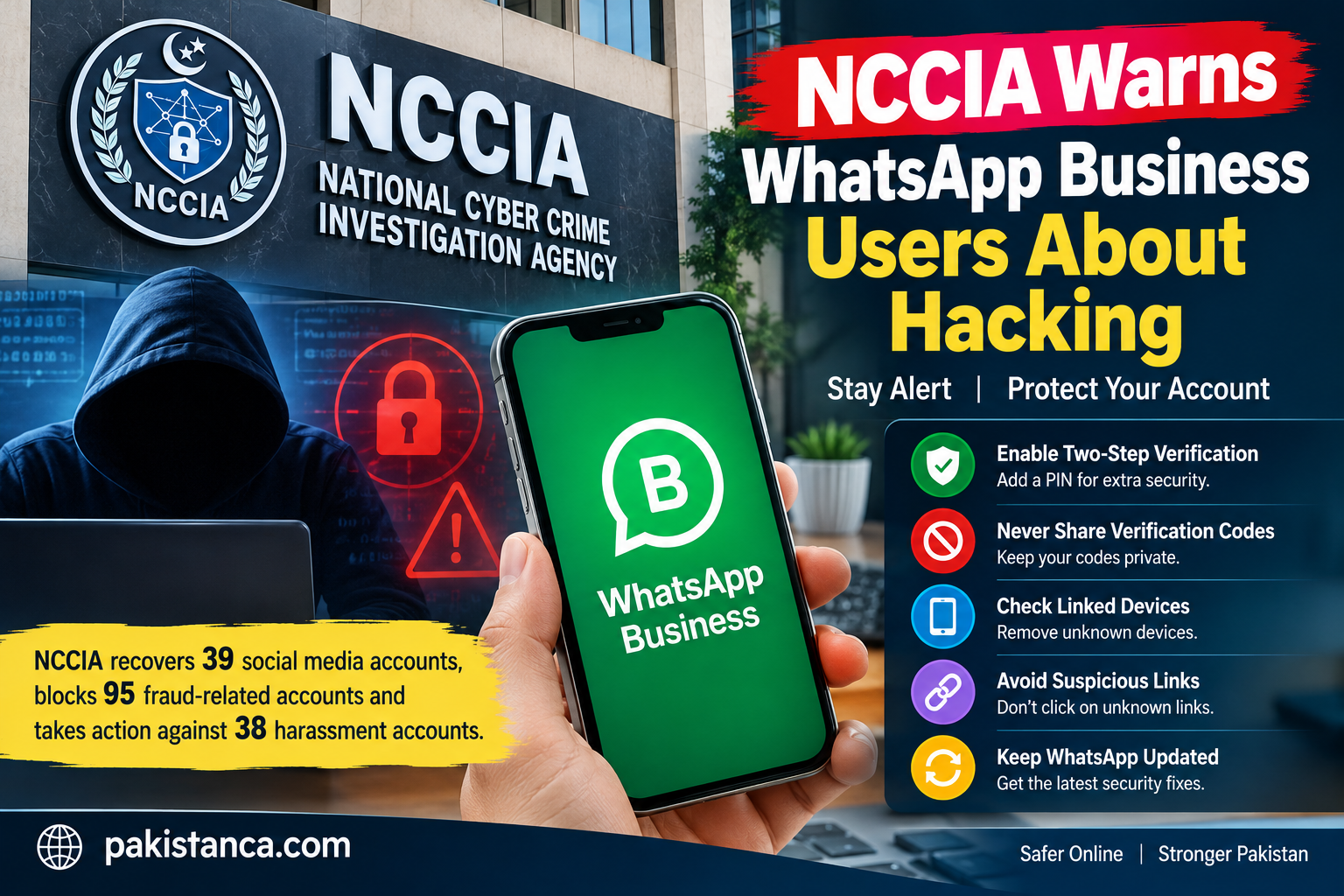
The NCCIA WhatsApp Business hacking warning has raised concerns among business owners and social media users in Pakistan. On October 24, 2026, reports stated that the National Cyber Crime Investigation Agency (NCCIA) Karachi Zone warned users to be careful as WhatsApp Business accounts were increasingly being targeted by hackers.
According to The Express Tribune, NCCIA Deputy Director Shehzad Akbar said the agency had recovered 39 social media accounts over the previous 15 days. The agency also blocked 95 accounts allegedly involved in financial fraud and took action against 38 accounts reportedly used to harass women through fake identities.
The warning is especially important for shopkeepers, online sellers, small businesses and companies that use WhatsApp to communicate with customers.
Why Is NCCIA Warning About WhatsApp Business Hacking?
WhatsApp Business is widely used by businesses to receive orders, answer customer questions and share product information. If an account is compromised, criminals may misuse it to contact customers, request money or damage a business’s reputation.
A hacked account can also put customer conversations and business communications at risk. For this reason, users should take account security seriously and avoid trusting unexpected messages, even when they appear to come from a familiar contact.
How Can Hackers Target WhatsApp Business Accounts?
Cybercriminals may use different methods to gain access to accounts. Common risks include:
- Fake verification requests: Scammers ask users to share their WhatsApp verification codes.
- Suspicious links: Fraudulent links may lead users to fake login pages or harmful websites.
- Fake customer messages: Criminals may pretend to be customers, delivery companies or support staff.
- Account linking scams: Users may be tricked into approving an unfamiliar device or linking request.
- Social engineering: Scammers use pressure, fear or false promises to convince people to reveal private information.
Users should remember that a verification code or account PIN must never be shared with another person.
7 Ways to Protect Your WhatsApp Business Account
1. Enable Two-Step Verification
Open WhatsApp and go to Settings → Account → Two-step verification. Follow the instructions to create a PIN. Add a recovery email if the option is available.
2. Never Share Verification Codes
Do not share SMS verification codes or your two-step verification PIN with anyone, even if the person claims to represent WhatsApp support.
3. Check Linked Devices
Open WhatsApp’s Linked Devices section and review all connected devices. Log out any device you do not recognize.
4. Avoid Suspicious Links
Do not open unexpected links promising prizes, business offers or urgent account verification. Confirm the sender through another trusted channel when necessary.
5. Keep WhatsApp Updated
Install updates from the official Google Play Store or Apple App Store to receive security improvements and bug fixes.
6. Secure Your Phone and Email
Use a strong screen lock, protect the email account linked to your WhatsApp account and never leave your business phone unattended.
7. Warn Customers About Fraud
If your business account is compromised, inform customers through another trusted channel. Ask them not to send money or share sensitive information in response to suspicious messages.
What Should You Do If Your WhatsApp Business Account Is Hacked?
If you lose access to your account, take action immediately:
- Open the official WhatsApp application and attempt to register your phone number again using the SMS or call verification process.
- Never share the verification code with anyone.
- Follow WhatsApp’s official account recovery instructions.
- Notify customers and colleagues through another communication channel.
- Contact your mobile network provider if you suspect your SIM card has been compromised.
- Preserve suspicious messages, phone numbers and transaction records as evidence.
- Report the incident to the relevant cybercrime authorities.
For additional guidance, visit the official WhatsApp Help Center.
NCCIA Reports Action Against Fraudulent Accounts
The recent report highlights the scale of online safety concerns in Karachi. According to the agency’s statements reported by the media, 39 social media accounts were recovered during a 15-day period, while 95 accounts allegedly linked to financial fraud were blocked.
The NCCIA also reported action against 38 accounts allegedly used to harass women through fake identities.
These figures underline the importance of protecting online accounts and reporting suspected cybercrime. They do not mean that every WhatsApp Business account is at risk of being hacked, but users should take sensible precautions.
Note:
For more updates on cybercrime, online scams, and digital safety in Pakistan, read our latest news on NCCIA investigations and account security at pakistanca.com.
FAQs.
Is NCCIA warning about WhatsApp Business hacking in Pakistan?
Yes. Media reports published on October 24, 2026, reported that the NCCIA Karachi Zone had warned users about the growing risk of WhatsApp Business account hacking.
How many social media accounts did NCCIA recover?
According to the report, the agency recovered 39 accounts over 15 days.
Why are WhatsApp Business accounts important to protect?
Businesses use these accounts to communicate with customers, receive orders and manage daily operations. Unauthorized access may expose communications or enable fraud.
Can I protect my WhatsApp account from hackers?
You can reduce the risk by enabling two-step verification, keeping your application updated, checking linked devices and never sharing verification codes.
Where can I report WhatsApp account hacking in Pakistan?
You can seek guidance through the National Cyber Crime Investigation Agency’s official website at nccia.gov.pk. Preserve evidence and follow the agency’s current reporting instructions.